

How to generate media coverage when hosting your own customer conference or training event

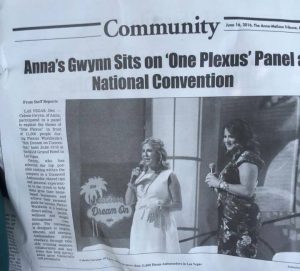
Celeste Gwyn - Anna-Melissa Tribune TX (3)

Back in July of 2014 I wrote a blog titled: How to get media coverage at an industry trade show and other conference and exhibitor tips.   That was for when your company attends or exhibits at a conference hosted by someone else.  But what if you’re in charge of the conference, hosting it for your users or customers? Earning some media coverage is likely easier than you realize, but it helps if you view your conference as several mini-events rather than one big one.   Allow me to share an example from just last week.

Last week I attended a convention 100% coordinated and hosted by one of our clients.  Held in Las Vegas, it was attended by nearly 12,000 home-based independent resellers. Yes, you read the number correctly.  There would have been more attendees, but they sold out two months early and there was literally no way to fit in more people.

Let’s get into how to generate media coverage.  The easiest mistake is to put all your focus on getting local media to attend your event or putting out one press release expecting everyone to care about your event.  Let’s be honest… Las Vegas reporters aren’t going to care as they see conferences all the time.  Even if they did cover it, the local Las Vegas TV audience wasn’t our target market.

Yes, of course, you should distribute a press release about your conference and send it to your target media outlets.  But if you treat it like every other press release it will get covered like every other press release.  If the conference is a super-big deal to your company, can you distribute more than one release to make sure those same reporters realize something big is happening?  For example, maybe you can do a general release about the event right before it starts, and a day or two later you can do another release highlighting that you introduced a new product at the conference, or a special guest presenter or event that occurred during the convention.  Include a photo from the event whenever possible.

What most companies forget is that they can also generate media coverage by focusing on your individual attendees.

If it’s a training conference, it’s a good bet that you have attendees coming from numerous cities. It’s also likely that your training session presenters come from different cities across the country.

Take photos of your individual presenters while they speak to your attendees, and send the photo with a caption to the newspapers in their hometown.  The recommended caption should highlight the presenter… something like Joe Schmo of Cleveland led a training session about underwater basket weaving at the national conference for COMPANY in Scottsdale.  COMPANY is the leading provider of waterproof yarn and Schmo is a regular user of the products.

You’ll be shocked how many of the small-town newspapers will run the picture and caption of a hometown individual being recognized as a leader.

For the client convention last week, we literally distributed three Corporate press release, and more than 40 individual presenter photo caption releases.    Some of the photo releases were delivered to the hometown papers before the presenter even left the stage (sorry for bragging… we are pretty proud of that one).  The client is already seeing coverage from the effort, and the presenters are thrilled for the free publicity in their hometown papers.  An added bonus is that those same presenters are going back to the company to thank them for getting them in their local newspapers.  It’s a win-win for everyone.

How to keep year-after-year events interesting

In preparing for my  wedding anniversary this month, one of my  tasks was to pick out a card at the store.  Staring at the shelves there were lots of card options, yet many of them seemed familiar.  I found myself trying to make sure that I didn’t purchase a card that I had already given her previously.

From a work perspective, it’s similar to pitching an event to media on an annual basis.  It’s okay to do the same successful media event year-after-year, just like it is okay to give an anniversary card to your spouse every year.   You simply don’t want to always give the exact same card.

Let me share an example.  Years ago I was the Public Information Officer for an ambulance service provider.  Every year in May, the industry celebrates national EMS Week where Paramedics and EMTs are acknowledged and thanked by the company and the public.

We were able to receive excellent media coverage by hosting an event where reporters and videographers got to drive an ambulance on a closed course.  We had a bunch of drills like serpentine through cones, tire spotting, etc. for them to complete.   During the driving demonstrations, we had the opportunity to talk about our amazing employees and to explain the extensive training each EMT driver completed before they were allowed to drive the ambulance on real roads and in emergency situations.

The media loved it, and several stations did stories.  Some did multiple segments throughout the morning newscasts live.  All the coverage talked about thanking employees during EMS Week and that driving an ambulance is harder than it appears and requires a lot of training.

The next year we wanted to offer ambulance driving event again, but we were worried about doing the exact same story.  So we made a minor change.  This time instead of media driving the ambulances, we invited Mayors and elected officials.  We even had an informal contest between some of the municipalities.  The elected officials loved it.  Media loved it too, as the elected officials driving gave them excellent visuals and each interviewed politician thanked our crews on camera for all that we do for their local community and its residents.

The third year we came up with yet another variation, inviting sports team mascots to drive the ambulances.  Media enjoyed this too, even though most mascots literally couldn’t fit behind the wheel. Instead we had to make up an obstacle course and different types of games for them to do and interact.  Reporters loved it—especially as the mascots wrapped up the reporter in gauze and other medical supplies on camera as part of their reporting.

My point is that it’s okay to do the same basic thing every year when it’s a crowd pleaser that gets the desired result.  The key is making a slight tweak to the annual plan to keep it fresh and fun.  It’s the thought that counts.

Passion Creates a Better Story

During High School and college I worked at several radio stations and was lucky enough to interview several famous musicians.  One was the Piano Man himself, Billy Joel.  He shared some advice that some 20+ years later still resonated with me.  He said, “Figure out what you’re good at, and do that.  Otherwise, you’re just wasting your time.”

Over the years, my memory of that interview is triggered by something I see or hear.  It’s happened a few times this week so I thought I’d write about it.

The first triggers stemmed from LinkedIn and Facebook posts.   I saw a few different photos and memes on the importance of passion.  For example, one said “Working hard for something we don’t care about is called stress.  Working hard for something we love is called passion.”

I also received a phone call from a peer that I highly respect seeking some advice.  About a year ago he quit his job after feeling burnt out.  He launched a new career and business, which is doing well.  But he admitted he was considering returning to his former career because he missed the passion he used to have for his work.

It got me thinking.  Being good at something isn’t the same as being passionate about it.

After that long lead-in, here’s my point.  Don’t waste your time.  Figure out a way to combine your personal passion with what you’re good at doing.

Here’s an example.  A financial advisor I know (no, not my wife) had a passion to ensure that his personal investments were not “terror infested.”  Unfortunately, no mutual fund existed that screened out U.S. companies operating in terror nations like Iran, Syria and North Korea.  So he created the nation’s only mutual fund developed to ensure all investments are terror free.  The fund screens the S&P 500 for companies operating in terror nations and replaces them with companies who have decided not to operate in rogue states.  He combined his talent with his passion.   It’s not easy, but it’s fulfilling and personally rewarding.

Our role as public relations professionals is to recognize the passion within ourselves, our organization and within our peers.   Then, we need to tell that story.  These human interest based stories will create memorable images that will create positive public awareness for your company.

Because passion is more memorable, and more contagious, than talent.

So to update Billy Joel’s quote, “Figure out what you’re good at and passionate about, and do that.  Otherwise, you’re just wasting your time.”

Why PR Pros should love Valentine’s Day

Some of my favorite media stunts relate to Valentine’s Day.  I’ll share examples in a moment, but first let’s examine the anatomy of how to construct a holiday focused media event.

They key is blending two unique components, or visuals, into the same story.

Part one is to identify the unique visuals for your organization that when someone sees it, they immediately think of you. An easy example for a transportation related company is its fleet of vehicles.   When you see a FedEx truck, you know what they do without having to think about it.  As it relates to a service business, when you see someone wearing scrubs and a stethoscope you immediately think of healthcare professionals.

Visuals for an ambulance service would be the ambulance itself, and a crew in uniform.

Part two is to list the visuals that are universally synonymous with set events or holidays. For example, a Christmas tree for Christmas or carved pumpkins for Halloween.  Visuals for Valentine’s Day could be anything with a heart or romance related.

Now the hard part– create a media event combines your work related visual and the holiday visual in the same screen shot/story.  Let me share a few examples.

Example #1:  Learn Hands-Only CPR Today, Save Mouth-to-Mouth for Valentine’s Day.

This headline/teaser was used for one of my favorite media stunts.   We had a paramedic in uniform standing in front of an ambulance, with a mannequin on a gurney in front of him so that we could teach how to do hands-only CPR.  Surround the mannequin with lots of Valentine’s Day items like candy hearts, balloons, etc.   By combining the ambulance service’s visuals with Valentine’s Day visuals and adding some puns, we made an every day story that media would normally ignore worth covering.

In addition to inviting media for the training, we created our own social media videos.  I had one out-of-state operation send me video clips which I directed remotely and I edited them into the following YouTube video.

On this story, the local PIO gave me one of the greatest compliments I can recall.  After sending out her media advisory for the event that included my recommended headline, one of the assignment desk editors responded telling her that the headline was in the running for their internal collection of best press advisory subject lines/headlines of the year.

Example #2:  A Special Valentine’s Day Date.

One of my all-time favorite media stories was for an ambulance service that used its vehicle to transport a husband that lived in one nursing home to a special lunch with his wife that lived in another nursing home.  You can watch that story here. 

While it’s a great story that viewers loved, the true business benefit came from the process.  In searching for a patient we increased the company’s awareness within care facilities to increase transport requests.

By offering the transport to a care facility, the administrator asked facility nurses and case managers if they knew of any transport candidates.  The same nurses and case managers that choose which ambulance provider to call for scheduled transports.   Even when they couldn’t find a candidate, they appreciated the thought and remembered who offered.  The best case scenario was actually when a facility said they couldn’t identify a patient.  This allowed us to start the process anew with another facility, getting us noticed by even more nurses and case managers.

Once the story ran, we then sent a link of the story to the care facility, resulting in numerous facility staff compliments and their thanks.

When planning your event, don’t make it more complicated than it needs to be.  Simple and punny often get the best results.  The best part is that once you find a formula that works for holidays, you can repeat the event year after year.

Let your news story live and breathe

It’s not my intent to get all DORKestra on you, but when I was younger I was a DJ and was obsessed with music.  Not surprisingly, I also used to love rock and roll movies.

You may remember the movie “Eddie and the Cruisers.”  It’s less likely that you remember its follow-up, “Eddie and the Cruisers II.”  There’s a scene from that movie that really resonated with me as it has a very important lesson that relates very well to public relations.  In the scene, that can be viewed here, one character explains that a fancy guitar riff was so dazzling that it wasn’t memorable.  In contrast, “letting the music live and breathe” makes it last.

As the spokesperson for your company, you might not think this lesson applies to you, but you’re wrong. Too often we overwhelm reporters and the community with unnecessary information to the point where they don’t hear us at all.  Try telling one story at a time.

The natural inclination when putting together a press release or sharing a story is to include everything. Don’t.  The more you try to say in a story, the less your audience will hear or remember.  You need the key message to be concise, and simple to understand.

Think of it this way.  A TV news story on your event is going to be 45 seconds long no matter what. Do you want to try and jam 3 different messages into that 45 seconds, or are you going to have a better, more memorable story if the entire 45 seconds are on one specific topic or subject?

The same rule applies for a print story.  Reporters normally want into a story knowing how much space on the page, or what word count they want to fill.  If you clutter a story with interesting but unnecessary angles or facts, you’re wasting your space that otherwise could have been focused on your core point.

The more you try to say, the less your audience will hear. Keep the message simple to digest, and easy to remember.

And to help drive home my point, I’m making this my shortest PR Medic column to date.

Timing is everything: A reporter’s deadline is more important than your own convenience

When you were a teenager, how did you ask your parents to agree to something they just as easily could have refused? You waited to ask for the right time, and asked in a manner that was more likely to get you the answer you desired.

It’s the same when asking a reporter to write a positive story about your company.

The first step is to understand a reporter’s deadlines, and respect them.  Once you understand their needs, you can time your strategy to increase your odds of success.

Deadlines and what they mean
Every media outlet is unique, but generally, here’s some sample timelines and daily deadlines for different types of media.

  • Television timelines: If a TV station has their newscast at 5pm, that means a reporter has to record, edit and hand in their story before the newscast begins.  If your media event is at 3 p.m., it means that it is likely to end closer to 3:30. The reporter will need to drive back to the station, edit the piece and turn it in.You’re cutting the timeline pretty close.  Instead, if you have the media event in the morning or at least before 2 p.m., you would have a better chance of getting coverage.Another consideration for TV is when the daily “morning meeting” occurs.  This is when the news department leader and the assignment team dole out the day’s assignments to reporters and photographers.  Many stations hold this meeting at 8:30 in the morning—after the morning newscasts are done but right before the next shift of reporters comes on for the day.During this meeting, they schedule out all the “pre-pitched” stories for the day.  So, if you send them a media advisory after that meeting has started, you will have little chance of getting a camera sent to your event that day. All the cameras have already been assigned to other events.
  • Radio timelines: Most stations run news during the early morning and late afternoon hours, when people drive to and from work.  There are also often short news updates at the start of the hour, as well as 30 minutes of the hour. If you call the station during these hours, you’re unlikely to talk to someone in the News Department.  Instead, midday is a better time to call to offer your story.
  • Community and weekly newspaper timelines: You should ask each paper for their editorial deadlines, but generally if a paper comes out on a Friday, their deadline for the print edition is often Tuesday or Wednesday.  If you pitch a story on Monday or early on Tuesday, you have a better shot to make that week’s edition.  If you pitch them on Wednesday afternoon, the earliest would be 10 days away — which for many stories would make them no longer newsworthy or timely.
  • Daily newspaper timelines: By 3 p.m. or 4 p.m., reporters are often hard at work writing their stories to submit to their editors, who then return the stories to reporters asking for additional edits or information.  If the reporter then asks you a follow-up question or a new query, help the reporter in a way that improves the chances the story will be covered in the way you want.

Help the reporter cover your story
The rule also applies to when you’re reacting to a reporter’s inquiry. Often, a reporter may ask a detailed or unexpected question in which you need to research the answer, or run your proposed answer through management. That can take time. Reporters understand that you don’t have every answer off the top of your head. But that doesn’t change their deadlines.

Whenever a reporter calls, before hanging up ask them when is the latest time you can call them back.  They’ll respect you for asking.  Sometimes you’ll be surprised to learn that they don’t even need the answer that day — giving you extra time to prepare your response. The key is that you must respond before that time.  Otherwise, you’ll look bad and untrustworthy in their eyes.

Avoid making more work for the reporter
Here’s another tip that’s important.  If the deadline is approaching but you won’t have an answer in time, call the reporter, apologize and admit you won’t have an answer by their deadline. The earlier you alert the reporter that you won’t make the deadline, the more he/she will respect you. It provides an opportunity for the reporter to locate an expert somewhere else, or write the story in a way where the missing fact can be avoided.

If you wait until the last minute, you’re putting the reporter in a bad spot. They may have to go back and edit a story they already wrote, or look for another source on short notice.

A reporter’s deadline is more important than your convenience.  Respecting those deadlines is a sign of respect to the reporter, and ultimately you’ll receive better, more positive coverage.

When you need PR ideas, turn to your co-workers

When I was a Public Information Officer for a private ambulance provider, I used to speak to new employee orientation classes. Of the 30 minutes I was allotted, the first 25 minutes were spent explaining my role, process and policies related to why employees can’t talk to media, etc.

But for me, the last five minutes were the most important. It’s when I asked the group what public relations and community involvement programs they liked that a previous employer did or what ideas they might have that their new employer should consider.

Most suggestions were ideas we were already doing or had considered, but decided not to pursue for cost or other reasons. Once in a while, an idea can become a real gem — if you’re willing to hear the suggestion and open to considering ways to implement it.

My favorite example is one I originally rejected. Toby was new to our marketing team and one of his personal passion projects was about the Safe Baby Haven law. Safe Baby Haven laws exist in many states across the country. A new mother can drop off her newborn child (72-hours or younger) to any hospital or fire station and absolve herself of any future responsibility for the child, no questions asked. The idea is to make sure that the newborn isn’t abandoned in a dumpster.

Toby was part of a volunteer group in the state that was promoting the law and trying to educate the public. He suggested that we place large Safe Baby Haven logos on the sides of all our ambulances and make the ambulances drop-off locations.

I’ve always been wary of putting too many logos and decals on an ambulance — we aren’t stock cars and the more logos added the fewer people see — but that’s a column for another day. Initially, I thanked Toby for the idea but mentally rejected it.

To Toby’s credit, he kept asking so I took another look at the law in Arizona. It stated that in addition to hospitals and fire stations being official drop-off locations, the law said that the baby could be handed to any uniformed Paramedic or EMT and the crew must accept the infant, no questions asked.

I was still against the idea of putting “drop off location” logos on the ambulances, but since the law already said we played a role, why not make sure everyone knew it? Working with Toby, we partnered with the Safe Baby Coalition, who had already secured a proclamation from the Governor declaring Safe Baby Haven Day.

We held a press conference at one of our facilities with numerous ambulances behind us as the backdrop to announce that the public should view all of our ambulances as Safe Baby Haven “locations” when the newborn is handed to an uniformed Paramedic or EMT.

You caught that last part, right?  It was already the law! We weren’t really announcing anything new!

And, now, for your moment of serendipity: During the press conference, where there was a full set of television cameras, reporters’ cell phones began ringing. It turned out that a baby was found in a dumpster — at the same time of our press event.

All of a sudden, our low level “C” story became the day’s lead story. Every mention of the baby in the dumpster included how preventable it could have been had the child been handed to an ambulance crew. We had 43 news mentions within 24 hours.

Example of TV Coverage:

Within a few days, fire chief’s in other major cities announced that they were making their ambulances drop-off locations too.

These turn of events, which stemmed from an idea that was initially rejected, happened because of a quick question thrown out at the end of an employee orientation speech.

Media relations: Why you should never burn your bridges

It’s okay to admit it: If you work in EMS, you’re likely inbred.

This realization hit me at a State ambulance association conference a few weeks ago where I was leading a session on how ambulance providers should use the media to make their agency stronger. As soon as I arrived, I saw former colleagues now working for different agencies. Some left on good terms; others, well, let’s say not so much.

It made me respect some people more than I did before. I felt sorry for others as they had to move and uproot their family to find another job in the profession. Yet, after it all, the same people were still in the room as before, just wearing a different logo on their shirt.

It reminded me of the importance of not burning bridges. I can personally vouch for the benefits of not burning bridges. I’ve been lucky enough to be invited to return to an employer a few years after leaving. Believe me, I was more surprised than anyone when I was asked, and am still grateful.

The trick to not burning bridges is really pretty simple. First, don’t slam a former employer on the way out the door, even if you have an opportunity or even a reason to do so. Second, keep in touch with the former coworkers you liked and respected while working there. If asked for advice, provide your honest opinion to help that friend succeed.

As it relates to burning bridges, it’s the same with reporters.

How many times has a coworker come to you after a story has run, demanding that you need to call the reporter or the editor and complain because they were misquoted, or they didn’t like something that was, or wasn’t mentioned in an article.  Should you call to vent your anger or to complain?

How would it make you feel if a reporter called your boss to say that you were bad at your job because your press release had typos? It’s the same thing as if you had complained about a reporter and make them look bad to their boss. All you’re doing is burning a bridge to someone you desperately might need on your side down the road.

Are there times when you need to call and ask for corrections? Absolutely. But those times are rare, so don’t waste them on minor items that really don’t matter. Also, try to be professional about it, not whiney. Most reporters really don’t have agendas. They just want to tell the story as simply as possible so they can move on to their next story. If you tell them of a substantive change, they want to correct it.

Let me throw out another idea. When was the last time you called or emailed a reporter to tell them you liked a story they wrote? It doesn’t even need to be about your agency. They don’t even need to respond. But there’s a good chance that they will remember that you complimented them without expecting anything directly in return.

You’ll remember it when they do the same to you. I still have the cards I received from a few reporters just days after serving as the spokesman through a line-of-duty death. It was the hardest week (professionally and emotionally) of my career, but two reporters took the time to send me notes thanking me for doing such a great job during the tragedy. They did it not because they expected something, but because they meant it.

That made it mean even more to me. And yes, over time they likely got a few extra exclusive stories as a result.

So, my fellow inbred siblings, I guess there are two lessons to this column and they both apply to your employer and the media. The first lesson is to not burn bridges. The second is to build those bridges stronger.

Talking to reporters: How to reach your true audience; Tips for getting the message out to the right people

It’s amazing how many PIOs and senior management have trouble answering this seemingly benign question, especially when the image and reputation of your agency hang in the balance.

The key is to quickly identify your TRUE audience. The “real” audience is ultimately who you want to understand and accept what you’re saying. The reporter isn’t your true audience; the reporter is just a filter to communicate to your true audience.

The trick is “seeing” your true audience when talking to the reporter. Confused? Let’s say a 25-year-old reporter asks you about health tips for seniors.

When answering the question, “see” your grandparents, not the 25-year-old reporter. The answer you give will come out differently, and when the reporter quotes you, the older readers will hear the answer in a way they understand that appeals to them.

It’s also worth noting that you may have more than one audience. Who do you believe are the true audiences in the following scenarios?

1. You’re hosting a media event where a patient wants to thank the paramedics, EMTs and firefighters that responded to their emergency. Your agency likely has several true audiences, all of which you can talk to at the media event.

If you’re an ambulance provider that contracts with a municipality, the fire department is clearly one of your audiences. Holding the event without first asking and inviting the fire department to co-host and participate would likely create a major headache for your agency and would hurt your relationship.

Local elected officials and regulators are another set of audiences, and so are your employees. It’s rare for EMS to be recognized, so coordinating an event like this is generally viewed as a compliment and acknowledgement to all EMTs and paramedics, not just the crew who literally cared for the patient.

2. Your agency is teaching CPR to a classroom full of 8th graders.  Is your audience truly the students themselves? Is it the teachers at the school? Sometimes they are.  However, other times you perform the training because you were asked to do so by a local regulator or decision maker in the system.   For the training itself, you will talk directly to the students and teachers.  You also need to make sure your other TRUE audience knows what you did.

Identifying the true audience is even more important during a crisis or negative story. What if your agency had a poor response time that resulted in a bad outcome?  Your true audience is your regulators and elected officials, along with people in the general public that might fear you’ll have similar response time issues should they have an emergency.   Envision these key audiences, and talk to them, not the reporter.

The reporter might not like it, but they can only quote what you actually say, they can’t control how your true audience interprets your answer.

Here’s a final trick that will help.  Whenever possible, “view” someone you know when answering the question.  It’s a lot easier to talk to someone you know, than a stranger. You’ll come across more friendly and you’ll talk at the level your true audience expects.

What’s your agency’s “Christmas Story?” Whatever it is, it’s got to be visual!

How many Christmas transports resulted from red rider bb guns?   How many transports due to bad eggnog?

What unique thing does your agency do to celebrate the holidays?

The key to creating a good “Christmas Story” for your ambulance service is to pull together two key images in to one story.

Image one is something intuitive that everyone knows is connected to the holiday.   This could be something with Santa, Christmas lights or menorahs, or wrapped presents.

Image two is something unique to your agency or industry.   For example, using the actual ambulance, crews in uniform, or a gurney is a visual that you can provide that a retail store of office cannot.

Now you need to do an image mash-up.  How do you combine an iconic holiday image with something uniquely ambulance?  Once you figure that out, the images will create an excellent potential media story or event.

Want an example?  Let’s say your agency is collecting presents for needy kids or food for the hungry.  Rather than having a box in your office like just about every company on the planet this time of year, collect them in the back of the ambulance and invite media to be present as you deliver them.  Unloading the ambulance full of toys or food creates a great visual- and for media to report the story the ambulance is essential to be included—giving your agency some extra positive publicity.

Another example:  Do you have data from past years of what types of holiday related accidents or calls are most common?  Media love statistics, so share the numbers along with some safety tips provided by a Paramedic in front of an ambulance at a media event.

Looking for yet another example?  Then let me share a story that still makes me feel good years later.

Several years in a row I had a Christmas date with a local TV news videographer.  After a few years of our “dates” she told me that she requests to work on Christmas, knowing that we’d spend it together.   I even invited my wife to join us, my young kids, even my parents came along one year.

Wondering where my story is going?  While serving as PIO of an ambulance company, I introduced a program called “Home for the Holidays” where we would transport a sick child or elderly parent from a hospital or care facility to the home of family members for a few hours so they could spend the holiday together.  We’d then invite a local TV station along for the ride.   It’s a story only an ambulance agency could create, and it “mashed-up” a holiday image with the ambulance and crew image perfectly.

While creating a newsworthy “Christmas Story” was the initial impetus for the event, the true power of the yearly even hit me one year around February.  I received a card from the daughter of a woman we transported who wanted to thank me one last time.  Her mother died the day before, and she wanted to make sure I knew how grateful she was that she’ll always remember their last Christmas together.

Another special memory came several years later where we transported a young Spanish-only speaking child with cancer home on Christmas for a few hours.  I vividly recall her young cousins gathering around her gurney and the girl reaching out to grab the arm or hand of anyone she could reach.  When the cousin she grabbed got uncomfortable and squirmed away, she’d simply grab the next person she could.  The relationship we build with her and her family led us to do a few additional transports for her before she eventually succumbed to the cancer.

As ambulance providers, your agency has the opportunity to create its own Christmas story.  Any story worth retelling, means there was a media opportunity as well.

Note:  A variation of this post also appears in my “PR Medic” column at www.ems1.com