

How to Leverage Community Outreach Initiatives for Positive Brand Awareness

How to Leverage Community Outreach Initiatives for Positive Brand Awareness


Written by Annie Appleton, PR Executive at 10 to 1 Public Relations

Corporate social responsibility, such as community outreach and charitable work from a business, has long been a tool used by public relations professionals to help bolster an organization’s reputation. There are a lot more benefits that can come from performing community outreach projects other than being a positive story to feed to the media. We’ll run through some of those benefits, plus how to turn a community outreach initiative into a PR win.

Why Community Outreach Matters

Performing community outreach is a great building block for positive brand reputation and recognition. Having strong community outreach initiatives also helps build trust between the business and the community. It shows that the business cares about its community and the people in it, thus helping to create a more loyal customer base. This also reigns true internally for the business or organization.

“Roughly 82% of U.S. consumers actually consider corporate social responsibility when deciding what services and products to buy and from where. Similarly, a survey of millennials’ work habits indicates that 86% of Generation Y workers greatly value their companies’ corporate social responsibility programs and would quit their jobs if those programs started to slip.”

Forbes

We are seeing more and more from both an external and internal standpoint that people care about what values a business stands on. People are choosing where to work and shop in businesses that align with their own core beliefs. With the rise of social media, audiences can determine by one post if they will support a business or not.

How to Identify Relevant and Timely Causes

The first thing we look at when start to think about a community outreach initiative is the calendar. We review what holidays are coming up, what time of year it is, and what is timely. For example, in June, a community outreach effort could be centered around Father’s Day, Pride Month, or summertime.

The next thing to consider is the who, what, and why:

  • Who in the community needs help
  • What are we going to do to help
  • Why we chose this particular problem to solve

Finding a cause or organization that is relevant to your business is a good place to start when it comes to deciding the “who.” Here in Phoenix, AZ, it gets hot in the summer. For those who haven’t experienced it, imagine walking into an outdoor wood-fired pizza oven. It is like that, only hotter, from May – October. Homelessness is a big issue here, caused in part by not enough affordable housing and an unstable economy. Here is why the who, what, and why come into play:

  • Who: People with little to no access to shelter from the heat
  • What: We will host a water drive by donating cases of water to an organization
  • Why: According to reports at least 130 people experiencing homelessness died from heat-related deaths in 2021

Getting PR Recognition for Your Community Support
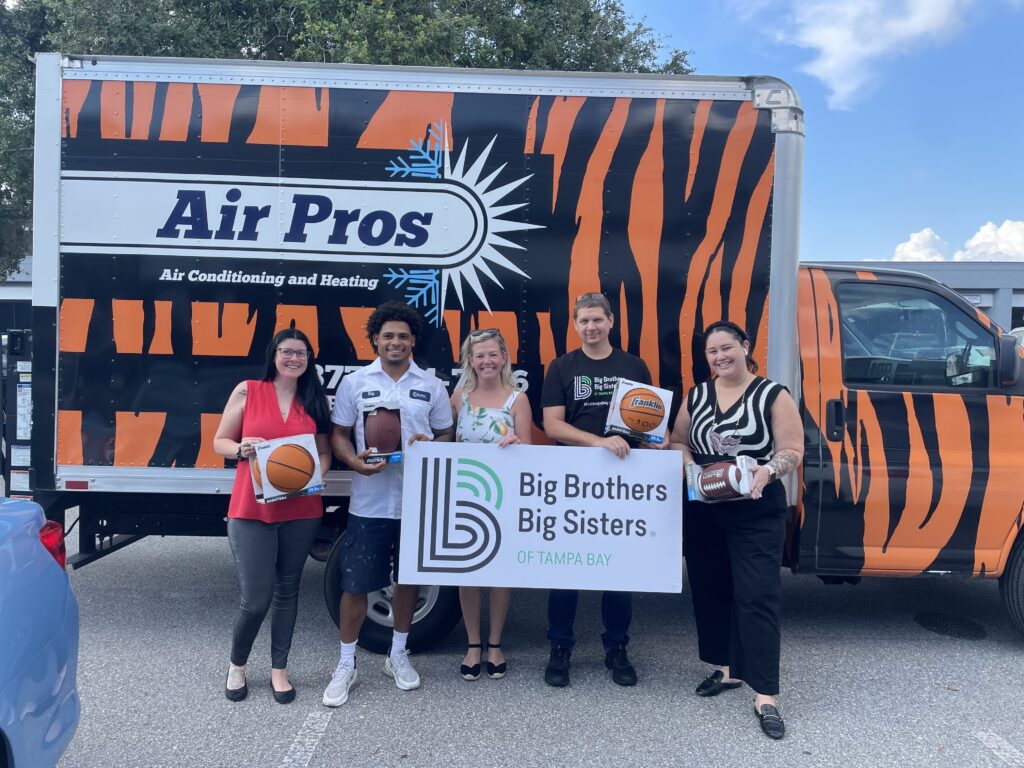
Our client Air Pros collaborated with their local Big Brothers Big Sisters organization on a donation to support kids in the community.

Once you have identified your cause and how you are going to help, there are several things you can do to leverage the work you are doing for positive public relations. Consider:

  • Creating an event around your community outreach project.
  • Make sure to take photos with your company’s logo visible
  • Invite the media to your event and offer interviews about the cause
  • Send a post-event story (along with your photos) to the media
  • Add how your company practices corporate social responsibility to the company website
  • Post your photos and community outreach projects on social media

The Big Picture: Impacting the Community
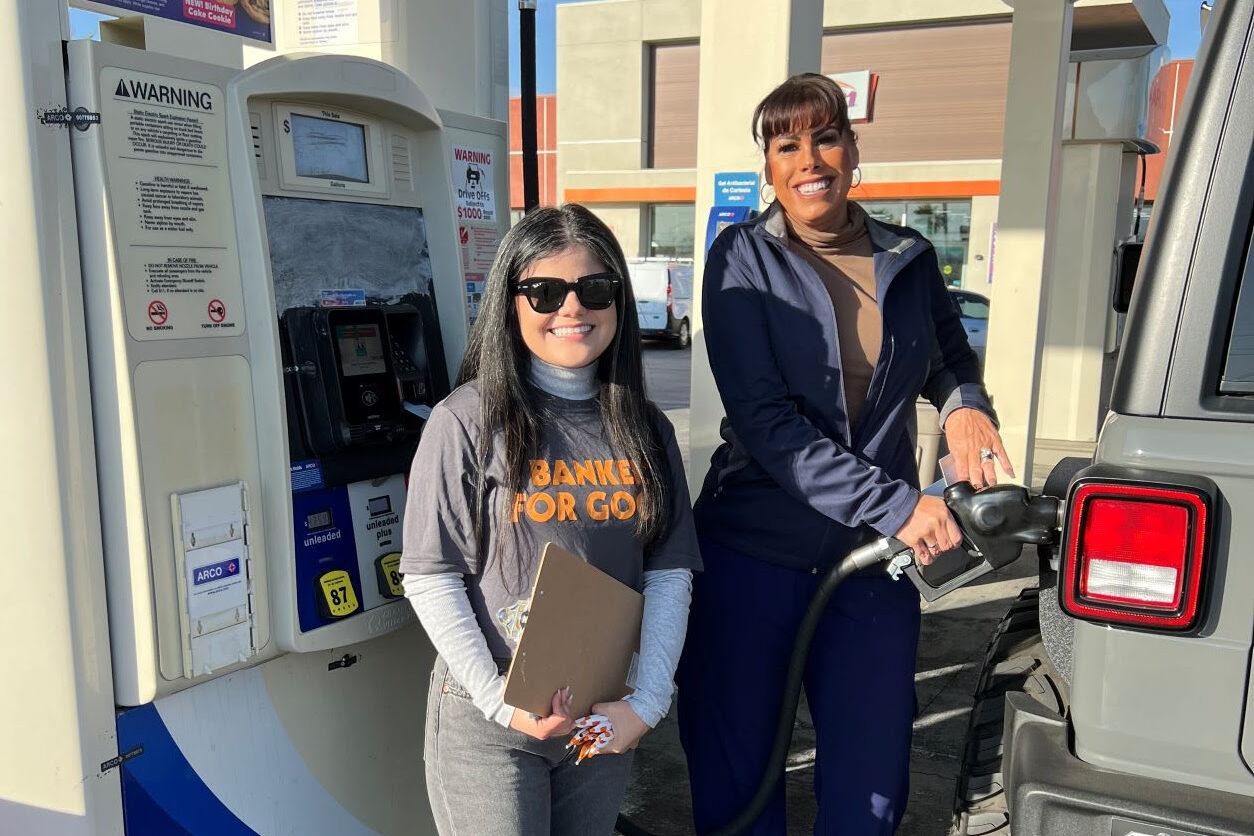
We worked with our client FirstBank to create the ‘Give it Forward’ campaign to raise awareness for donating to local nonprofits for Coachella Valley Giving Day and Arizona Gives Day. For this year’s campaign, FirstBank surprised local residents by covering their gas bills and encouraging them to ‘give it forward’ by donating to a nonprofit of their choice.

Most importantly, community involvement helps the community at large. When performing acts of service there are real people in real need that are the most important beneficiaries. Think about a back-to-school supply drive. Those who benefit the most will be the teachers that often have to buy supplies for their classrooms out of their own pockets, and the children who will have the supplies they need to learn. That should always be the main focus of a community outreach project, not how it benefits the business doing the service, but how it benefits the community.

The internal benefits of community involvement are vast. These programs and projects are wonderful for team building and unifying employees. They get the whole team to work on one goal – helping others. It can help raise employees’ morale as well. If employees are given a voice on what projects and issues are important to them, it can leave them feeling not only more professionally fulfilled but also fulfilled on a personal level. Many businesses and organizations choose to schedule volunteer days where, instead of going to work, they volunteer at an organization for the day. This gives the employee more control to choose a cause close to their heart.

Takeaways

Taking part in community outreach programs is a wonderful way to practice corporate social responsibility. Community outreach can help to build brand recognition and reputation, foster trust with customers and the community, and bring a team closer together. But when we look at the bigger picture practicing corporate social responsibility by helping the community around us is invaluable to the community and the individuals that are at the receiving end.

We should all try to leave the world a little better than when we arrived. Companies are no exception. There is so much good that can be done in the world, so many people that could use a helping hand, and not enough people that are willing to extend that helping hand. I encourage you to go out and be involved in your communities, and strive to be the good in the world, you will be surprised how even the smallest of things can make an enormous difference in the lives of others.
What’s Next in Public Relations: Four Takeaways from the PRSA Western District Conference

What’s Next in Public Relations: Four Takeaways from the PRSA Western District Conference


By: Erica Fetherston, Director, 10 to 1 Public Relations

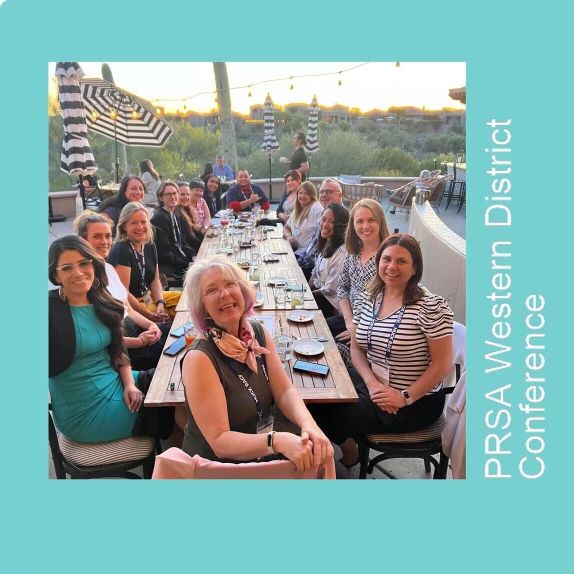
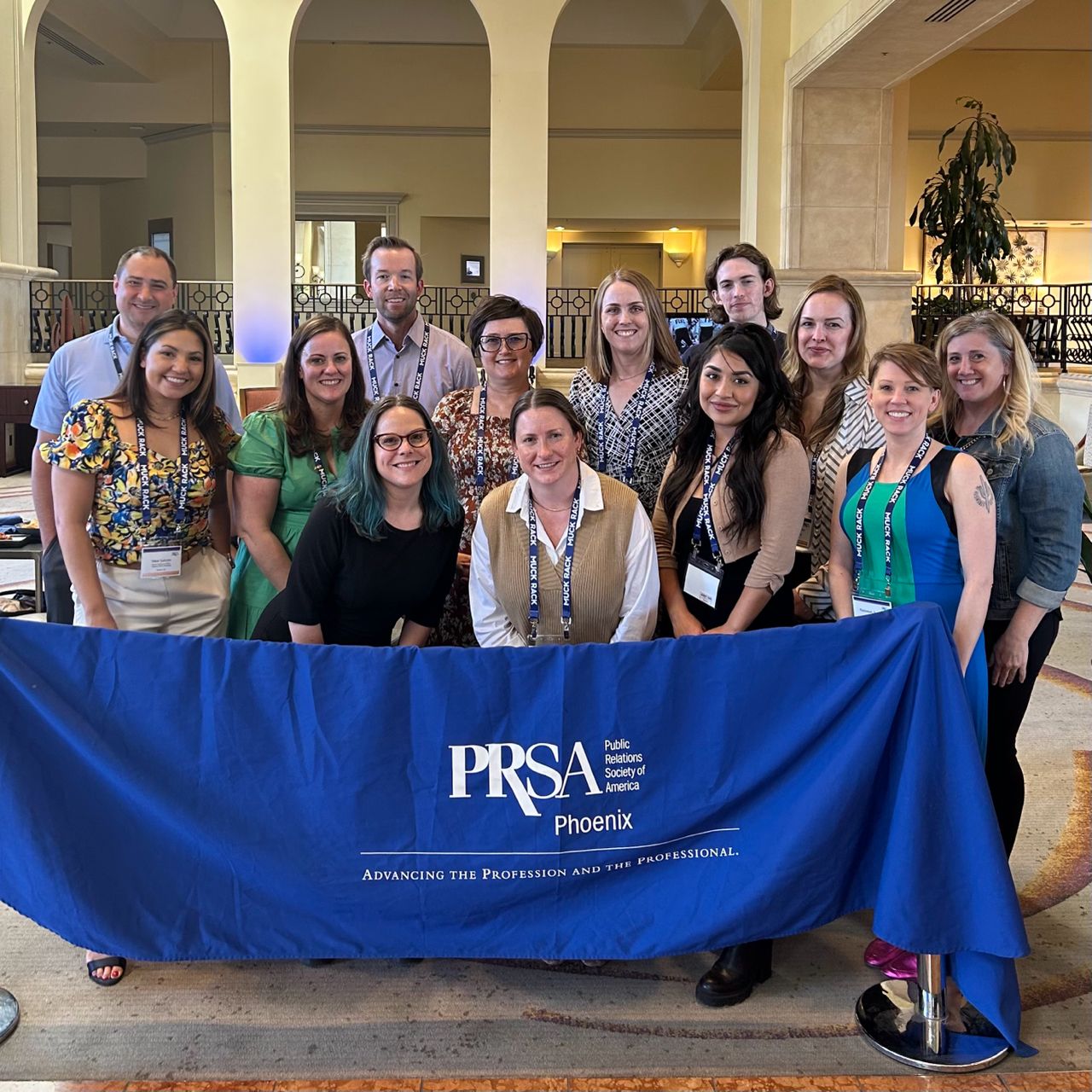
The PRSA Western District Conference is an annual opportunity for public relations professionals from across the West to gather and discuss opportunities, trends, and challenges within the industry. With this year’s event in Tucson, it was just a short trip down I-10 to immerse myself in everything PR for a few days. 

While there were some incredibly impactful and thought-provoking sessions throughout the conference, there are several key points that stick out to me now that I’ve been back to work for a few days. Here are four things that I’ve been thinking about: 

1. AI will have a huge impact, but we aren’t sure how yet

Everyone is talking about ChatGPT and how it will change the public relations industry forever. We all agree there will be a huge impact as we learn how to leverage this new technology, but there are some major warnings to keep in mind. AI can be a useful tool to spark creativity or help with brainstorming, but it should not be trusted to create original written content that is completely factual and free of bias. Public relations professionals should not fear the integration of AI into our daily lives, as its rise will make our jobs as strategic advisors and critical thinkers will become all the more significant for our clients and organizations. If organizations are going to integrate it into their use, however, they should create clear policies to dictate how it should and can be used. 

2. Understanding and checking biases is constant work

As strategic communicators, it is our daily role to ensure that the messages we are distributing and the language we use avoid bias. Everyone has biases, no matter their experience or background, so the first step is understanding and recognizing what biases we may possess ourselves. Then, we must constantly review our own work and messaging to ensure that our biases do not have a negative impact on our intended goals. One tool we learned about was ‘asset framing,’ or defining by assets rather than deficits, problems, or challenges. Additionally, if we aim to communicate with a specific audience or group that we do not belong to or have experience with, it is recommended to reach out to that group to confirm what kind of language they prefer. This can be helpful as language and preferences are constantly changing, so it is always better to get those confirmations than to make assumptions. 

3. Thought leaders are leveraging LinkedIn more and more 

LinkedIn isn’t just for entry-level job seekers. There are millions of senior-level executives in every imaginable industry on the platform. Increasingly, these executives are using LinkedIn more frequently as part of their thought leadership strategy. They use the platform to share news and insights while engaging with their network to solidify their reputation as a thought leader in the industry. If a robust LinkedIn strategy is not part of your thought leadership campaign, it should be! 

4. Measuring the impact of PR continues to be a challenge

All public relations professionals know the challenge of reporting the impact of public relations wins and campaigns. We may secure an amazing earned media feature in a top-tier outlet for our client or organization, but what is the measurable outcome that we can report? The answer seems to be that it depends on what metrics matter most, and what metrics are achievable. There may not be a one-size-fits-all solution, as measuring impact changes from campaign to campaign or client to client based on the underlying goals. It is important to ask: What metrics matter? What metrics/data do we have access to? 

Many things may change but one thing will be true: Public relations professionals are often at the forefront of periods of transition and innovation due to the nature of our roles and responsibilities. Having to create and execute strategic communications around a global pandemic, social justice movements, an up-and-down economy, and so much more has prepared us to be some of the most adaptable and resilient pros out there. Opportunities like the PRSA Western District Conference only help us stay further ahead of the curve so we can deliver the best possible services to our clients and organizations. 

How to craft a compelling holiday campaign

How to craft a compelling holiday campaign


Written by Katie Geraghty, PR Executive at 10 to 1 Public Relations

It feels like each day in our calendar year has been deemed a holiday in some capacity, allowing a perfect opportunity for your company to capitalize. Whether it be celebrating Veterans Day or Talk Like Shakespeare Day, holidays come in all forms each with its own potential audiences.

Identifying and amplifying holidays that relate to your organization’s mission or values allow for meaningful, relevant, and strategic media opportunities. As media relations experts, holidays of any kind give our team an opportunity to showcase clients through local promotions or events. Planning and executing these media campaigns keeps our creative juices flowing while gaining positive, local media attention for our clients.

Try it for yourself, here are 5 tips for your next holiday-based media stunt:

1. Identify campaign goals

Identifying the solid goals of the campaign as well as the target audiences are the key first steps to planning a successful campaign. Meeting with your team and all involved to clearly identify the goal for the holiday campaign is essential to its success. What’s that overused saying, ‘Rome wasn’t built in a day’. Go ahead and apply that logic here. Laying a solid foundation will allow you to reach new heights, heights being audiences of course.

2. Research, research, research

Investing quality time into understanding what the holiday represents is essential to avoiding any PR blunders. Identifying the true meaning of the holiday will better allow creativity to flow throughout the process of developing the holiday event.

After identifying an appropriate holiday to center a media event around, it’s important to identify how this ties directly to your client’s business goals and PR strategy. The final component of researching for the event involves identifying the appropriate markets and audiences, without the appropriate targets, the event will carry less impact and relevance!

3. Collaborate

Working together with your team to identify a few tie-ins to the holiday provides a great springboard to create better, more relevant ideas. In a creative field such as PR, we see the benefits of collaborating every day.

Bringing together a diverse team for a brainstorming session can be extremely helpful to hear various perspectives and develop an idea everyone can support.

4. Plan every detail

For every media event you coordinate, planning is truly at the core of ensuring the success of a campaign. Establishing clear timelines, deliverables, and roles will allow everyone involved to feel much more relaxed and comfortable throughout the process.

Nailing down the nitty gritty ahead of time will relieve stress points. We recommend working with your team to identify potential roadblocks and develop solutions ahead of time, so everyone feels prepared.

5. Evaluate the Results

Execution is a direct result of your planning efforts, but you’ll need to be flexible in case something doesn’t work as expected. Each event is a great opportunity to learn about the needs of the media and community, so allow yourself to be present and observant!

Taking the time to reflect on the event directly after will allow your team to better understand the successes and identify any missed opportunities. Reflecting, adjusting, and implementing these ideas will make your next event even easier.

If you ever need help, the team at 10 to 1 PR would love to help!

How to Better Personalize Your Story Pitch for Media

How to Better Personalize Your Story Pitch for Media


By Madeleine Williamson, PR Coordinator at 10 to 1 PR

From an outsider’s perspective, pitching the media to cover a story may seem easy. After all, anyone can email a reporter information about a story. Right? However, only 8% of stories pitched to reporters make it to publication. In the public relations industry, it can be argued that pitching the media is one of the hardest tasks to do. 

Public relations professionals specialize in pitching. One strategy PR pros use to help their pitches make it to publication is building relationships with reporters. Building relationships with reporters benefits PR efforts in the long run and ultimately leads to successful storytelling for both the client and the media. 

So, how do public relations professionals build a relationship with a reporter? The first step is to better personalize your pitch. Personalizing a pitch for a reporter makes the story more likely to run while also building a relationship that will increase the likelihood that future stories will run, too. 

Here are 5 tips on how to better personalize your pitch:

  1. Do your research

You can’t pitch unless you know who you are pitching, and you certainly can’t personalize a pitch without learning about the reporter. Decide who you want to pitch your story to and why. Ask yourself the question: why would my pitch be relevant to this reporter? After you’ve decided that the pitch is relevant, then get a grasp on who the reporter is. This is what will help you to better personalize your pitch later. What topics do they cover most? How long have they been reporting on that industry? Do they write quick summaries or long articles that require weeks of research? Find out as much information about the reporter and their style of writing as you can.

  1. Recognize media complaints about pitches

Be aware of past complaints or requests from reporters you may be targeting. Common complaints from reporters include frustrations with the lack of imagery in pitches, or receiving irrelevant story topics when on tight deadlines. Make sure you are listening to these complaints and adapt your pitch accordingly. In fact, the next time you pitch that reporter, say that you remember them mentioning they are on a tight deadline and ask what more you can do to help, include photos in the original pitch, or give a specific example of how your pitch relates to the topic they report on. 

  1. Personalize the subject line

The subject line of any pitch is key to getting your pitch read. Reporters have to want to open your email. Luckily, personalizing the subject line of your pitch doesn’t have to be difficult. Remember, personalizing a pitch means making the reporter feel that you specifically chose to pitch to them. More personalized subject lines could reference past work done by the reporter, or specific sections the reporter covers in the publication they work for.

  1. Reference social media 

Social Media is a great tool to use when trying to personalize a pitch. Mention that you follow the reporter on Twitter and saw their tweet about a certain topic. Point out that you and the reporter are alumni from the same university if it’s listed in their bio. Most reporters appreciate when people engage with their content on social media. Showing a reporter that you see the work they are doing and care enough to reference a post will help your pitch stand out. 

  1. Keep in touch

Personalizing a pitch doesn’t stop once the pitch is sent. To keep in touch with the reporter and to continue to build a connection, follow-up is required. Thank the reporter for their hard work, ask the reporter if they are looking for any other story topics, or tell the reporter you read their story and enjoyed it. Just be sure that if you are sending a follow-up to the pitch it has a purpose. There is a difference between keeping in touch and bothering a reporter. 

Remember that building relationships with reporters by personalizing pitches will take time. Nothing happens overnight. Feel inspired to try some of these tips and see what works for you. Who knows, you might begin the start of a great new connection. 

5 Public Relations Tips for Nonprofits

5 Public Relations Tips for Nonprofits


This article was originally published in Entrepreneur. Click here to read the entire article.

Should public relations for charities and nonprofits be implemented differently compared to for-profit businesses?

For nearly 20 years, I’ve been asked a variation of this question by nonprofit leaders. Since I launched my PR firm about a decade ago, the question comes even more frequently. While most of our clients are for-profit businesses that are national or in several markets, we have also worked with a handful of charities and nonprofits over the years, some that are nationally focused and others local only to a single media market.

When it comes to PR tactics, it doesn’t matter if you’re a for-profit or nonprofit. Sure, a nonprofit might be focused on specifically promoting its fundraising or education efforts, but when you boil it down, it’s really promoting a service, product or idea just like a for-profit business.

I’m constantly impressed by the mission-driven focus of the many nonprofit leaders that I’ve worked with, and I believe business leaders can learn a lot from their passion and commitment to achieving an end goal. The challenge is that some nonprofit leaders fail to understand that their organization is a type of business too and that public relations is a key ingredient to achieving success for their overall mission. Many times, and for various reasons, nonprofit leaders have the wrong mindset and don’t recognize or believe they should adhere to the proven PR recipe that many businesses follow…

Click here to read the 5 tips for nonprofits.

750 news stories in four days, and I wish not one was necessary

How to prepare employees for a deepfake attack


On April 28, 2020 my PR firm signed a new client, Ambulnz, a national ambulance services provider at the time with 1,000 employees in 8 U.S. States and operations in the United Kingdom (they’ve grown rapidly this year expanding their services and geography that ultimately led to them going public, but that’s a success story for another time). I’d been chatting with them for a while, and normally I’d be very excited to get the contract signed. Instead, their reason to sign when they did brought back emotions and memories of the toughest work week of my life back in 2004.  Here’s why.

Incoming Crisis

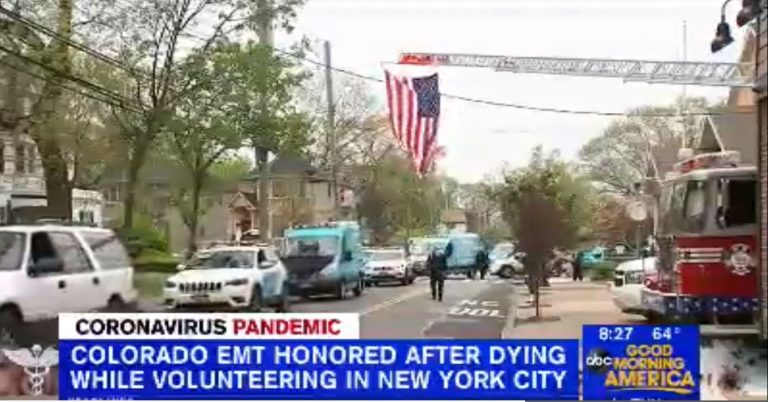
You may remember when COVID-19 was first becoming a reality in the U.S., New York City was particularly hard hit making it the pandemic focal point of the nation.  Ambulnz had deployed more than 70 employees to New York City to be part of the company’s FEMA COVID-19 response to help New York City’s overwhelmed EMS and healthcare system. Those deployed had volunteered from its operations across the U.S. such as Los Angeles, Tennessee, and Colorado.

One of their deployed Colorado paramedics, Paul Cary, was in the hospital with COVID-19 contracted after transporting New York patients. Doctors said the prognosis looked grim. Expecting the worst, they knew they needed experienced PR guidance. They also needed someone to become the sole primary point of contact for media on behalf of the company, as well as the family, throughout the crisis if Paul did in fact succumb.  

Some quick background for those who don’t know: before launching 10 to 1 Public Relations, I worked in-house leading PR efforts for statewide and national EMS (emergency medical services) companies for several years. The first time I led media relations efforts for a Line of Duty Death (LODD) was in 2004 in the Phoenix area. That experience literally changed my professional career, teaching me the importance of controlling the flow of information and giving me the confidence that I could handle any crisis and that PR was truly my career calling.

So here I was again, 16-years later.  My team quickly engaged, working with the Ambulnz team we began preparing for the worst. Unfortunately, two days later, paramedic Paul Cary died from COVID-19 in a New York City hospital.

Facing Unique Challenges

Any LODD is horrible, but logistically this one was unique. Usually the community outpouring and media interest is limited to a single media market. Living and working in Colorado for more than 30 years, Cary’s Denver community was mourning. With his death occurring in New York City while he came to the City’s aid, New York City was equally mourning. New York City being the largest media market in the U.S. alone can be overwhelming to a media relations department during a crisis but now we were focused on two locations 1750 miles from one another.

Add on top of that, this marked the first death of a volunteer federal responder to New York’s COVID response effort, which created national media interest. National media, New York City media, and Denver-area media. All at the same time, from different time zones. Three because it wasn’t only Denver and New York, but media was also being coordinated from Arizona where my team is located. 

Another challenge: We had never actually met any member of the Ambulnz team before, only a few phone calls with two or three people, so we needed help identifying the right contacts within the organization to get whatever we might need.

The final challenge was we had to do everything remotely because of social distancing. Flying our team into one of the cities to assist on the ground just was not doable.  

In the end, over a 4-day period of 15+ hour days, I think that week was one of the most professionally and personally gratifying work experiences I can recall. 

Enacting the Crisis Public Relations Plan

Ultimately there were more than 750 news stories in four days. We coordinated interviews and worked with reporters from some of the country’s most recognized national media outlets like CBS This Morning, Good Morning America, CNN, Fox News, the New York Times, and the Washington Post. We coordinated interviews and worked with local print reporters and TV affiliates in New York City and Denver like the Denver Post, the New York Daily News, WABC, WNBC, Denver7 and KUSA. And we did so quickly and equally, regardless of the media outlet’s size so that every reporter felt like they got our full attention.

Developments that led to a lot of the media interest included public statements from the Governors of New York and Colorado, as well as the Mayors of Aurora, Denver, and New York City. The biggest surprise to me came from the Mayor of New York City when during a press conference surprised us all to say that a monument would be built in Paul’s honor recognizing his sacrifice and all the healthcare workers that came from out of state to help the city when it was needed most. 

The New York City Fire Department helped coordinate a massive funeral procession of emergency vehicles, only to have that effort matched in Denver with a 160-vehicle procession. Both the Newark and Denver Airports allowed bagpipes and full honors as the casket was loaded and unloaded from the plane, and both airports saluted the flight with water cannons as it taxied to and from the gate.

These efforts, and participation by other agencies and officials, made a huge impact on other first responders and healthcare workers as well. I’m proud that we had the opportunity to successfully help share it with the public through the media.  

Full Circle

My pride extends beyond our media efforts. We also coordinated all the public statements, employee outreach, coordinated with the family to generate and share their public statements, and also assisted with the planning of the public events as Paul’s body returned to Denver that Sunday night. 

To think of what was accomplished so quickly, I can’t help but think of how many people contributed to the efforts to share Paul’s story with so many. I’m overwhelmed with gratitude towards the many local PR pros that stepped up to help in Denver and New York since I couldn’t be there personally on the ground to do it myself. I cherish the kind notes from media folk and other agencies for how we performed, and for the quality of the communications we shared. 

Throughout this whole experience, there’s been one more emotional tie-in that has taken me back to my first LODD. The date Ambulnz called me to hire us and seek our help regarding the LODD was 16 years to the day of Tammy Mundell’s death, the first LODD I worked which solidified my career path. With that first experience in mind constantly through the week, I was able to lead my team with a solid plan and deliver the results our client was looking for.

Thank you to first responders

My team and I would like to thank our country’s first responders serving on the front lines of the coronavirus pandemic. We have immense gratitude for the work that you do every day to help those in need and keep our communities safe. Thanks to you and your families, from the bottom of our hearts.

Finally, I hope that my recap doesn’t come across as self-serving.  I actually wrote this nearly a year ago for myself, but never published it.  A year later, as we approach the last week of April and these solemn anniversaries, I keep thinking about how it impacted me personally so I thought it worthy of sharing, now.

Rest in peace, Paul Cary.  Rest in peace, Tammy Mundell. 

A Lesson for Business During March Madness

A Lesson for Business During March Madness


It’s that time of year- The March Madness college basketball tournament.  If you’re not a college basketball fan, keep reading. Don’t worry, what I’m going to share should still make sense.

Like a lot of people, every year I complete a bracket of the participating teams to predict a winner. But, in truth, I barely pay attention to college basketball during the season.  So how do I choose which team I think will win?

Sometimes I favor teams from my hometown simply because I want to see them win, or the team representing the mid-major conference that my alma mater plays in.

Like most people, I usually just go with the teams I’m most familiar with, or the teams with higher rankings. 

Duke Basketball is the perfect example.  For the first time in decades, Duke did not make the tournament, but had they squeaked into the field of 64 my assumption is that a lot of casual basketball fans would have chosen them to make the Sweet 16. Simply off of name recognition, awareness of their team history, and out of respect for their well-known coach.  Their legacy matters- and people are willing to give them the benefit of the doubt even during a tough season. 

A lot of people choose a product or business the same way. 

There’s comfort in familiarity.  There’s confidence in a track record of success, even if the current task is something new.  Belief in individuals transfers to trust in an organization.

How does a business achieve this?  By playing the long game and promoting their successes along the way.  It’s not by announcing one big new contract, it’s by announcing a steady stream of contract wins over time.  It’s not by creating one single event, it’s by promoting numerous events throughout the year.

One good season or one good story isn’t going to earn long-term loyalty. It’s repetition of actions, over long periods of time, which ultimately breeds public confidence. It’s that awareness and reputation which will sustain a company even during a rough patch.

Finally, allow me to share one last off-topic story simply because it makes me smile every year around this time.  Probably a good 15 years ago or so, a friend of mine had a vasectomy.  He had to book it far in advance because he wanted the timing to coincide with the start of the basketball tournament.  Turns out he had to book early because a lot of guys have the same idea. They figure if they had to sit at home with a bag of frozen peas in their lap for a couple of days, they might as well do it while there were constant basketball games on TV!  


PR for the Win

PR for the Win.


While this new year has just begun, it already feels like a sprint. Not just from the renewed energy of our current clients, but as demonstrated by the significant increase in prospective client inquiries that we’ve already received this year.

Why is this year different? Significant change is imminent.

2021 initially might feel like a continuation of 2020, but the ending will be far different. I’m not just talking politically, but as it relates to the pandemic and ultimately the economy. The general public can finally see a potential end to the pandemic once enough vaccines are administered. Businesses are seeing it too.

But this year, it’s like everyone is on the same compressed schedule to make up for time lost due to the pandemic, forcing many companies to work harder to ensure they’re at the front of the pack when potential customers cross the pandemic finish line. 

Thinking about this finish line, I can’t help but think about how a company’s PR strategy correlates to a race day strategy.

Back to high school when I ran track, my primary race was the 400 (one quarter of a mile) or one full loop around the track. I was decent at it. My freshman year, my best time was 55 seconds, good enough to earn a spot at regionals. My coach tried me in some other races like the 100, but I didn’t have a great start out of the blocks so my times were never great. He tried me at the mile, and while I started strong, I would fade to the back of the pack as the race went on. 

My success at the 400 wasn’t based on technique or skill. Ultimately it came down to one thing: I always ran the race as a flat-out sprint. I wasn’t the fastest out of the block, but I was by far the fastest in the middle of the race building up a lead. By the end, I was running out of gas trying desperately to hold on to the lead that I had built. This often led to my getting passed at the end by a closing competitor who had saved some energy for their sprint to the finish.

It’s okay to sprint the entire way from start to finish, it is a valid strategy for some cicumstances. But if you want to win the race, the strategy is done before you ever step foot on the track. It means before the race even begins you need to know what length of race you need to enter to make sure you end up in the right spot at the right time. Otherwise, you risk of running out of gas as you to watch your competitors run right by you into the arms of your potential customers.

It’s why you see a lot more in-race strategy occurring in longer races. The goal isn’t having your personal fastest time across the finish line, it’s simply about crossing the finish line first. It’s why you often see a clump of runners in a pack despite everyone having a different strategy. The goal is about trying to force the competitors to react the way you desire to advance your strategy to win. The runners with a fast last leg sprint try to stay with the pack and keep the pace slow until the end knowing they can outrun the rest. The runners less known for their sprint abilities may try to push the pace faster early in hopes of leaving others so tired or far behind they have nothing left at the end and can’t catch up before the race ends.

Which brings us back to today’s race to the pandemic finish line. Current predictions are that sometime later this year, we’ll pass a threshold where enough people have been vaccinated and it becomes safe to start gathering in groups again, going back to the office or booking travel plans.

As a business, you need to think about this race route from start to finish and how a public relations strategy can help you come out ahead. Along that route, you need to place different potential “PR story” flags along the way. Maybe the best strategy is placing the flags equal distances apart and simply sprinting as fast as you can through all of them to reach the finish line before anyone else. Or, maybe your strategy is to start off slower and clump more of the flags towards the end to ensure you’re at your top speed as you reach the finish line. 

As a PR firm, my team excels at developing a plan, planting flags and implementing the strategy. If you need help, let us know. We’re already wearing our running shoes and are ready to go.

— written by Josh Weiss


One Last (Genuine) Thank You in 2020

One Last (Genuine) Thank You in 2020

With hindsight finally becoming 2020, I wanted to take this last opportunity to say thank you.

Bluntly, the year was just straight-up unprecedented.  While a difficult year for everyone on so many levels, I’m so humbled and appreciative that 2020 was by far the best year 10 to 1 Public Relations has had, yet. 

I just learned a number that simply amazes me.