Inside the Newsroom: Takeaways from the PRSA 12News Media Panel
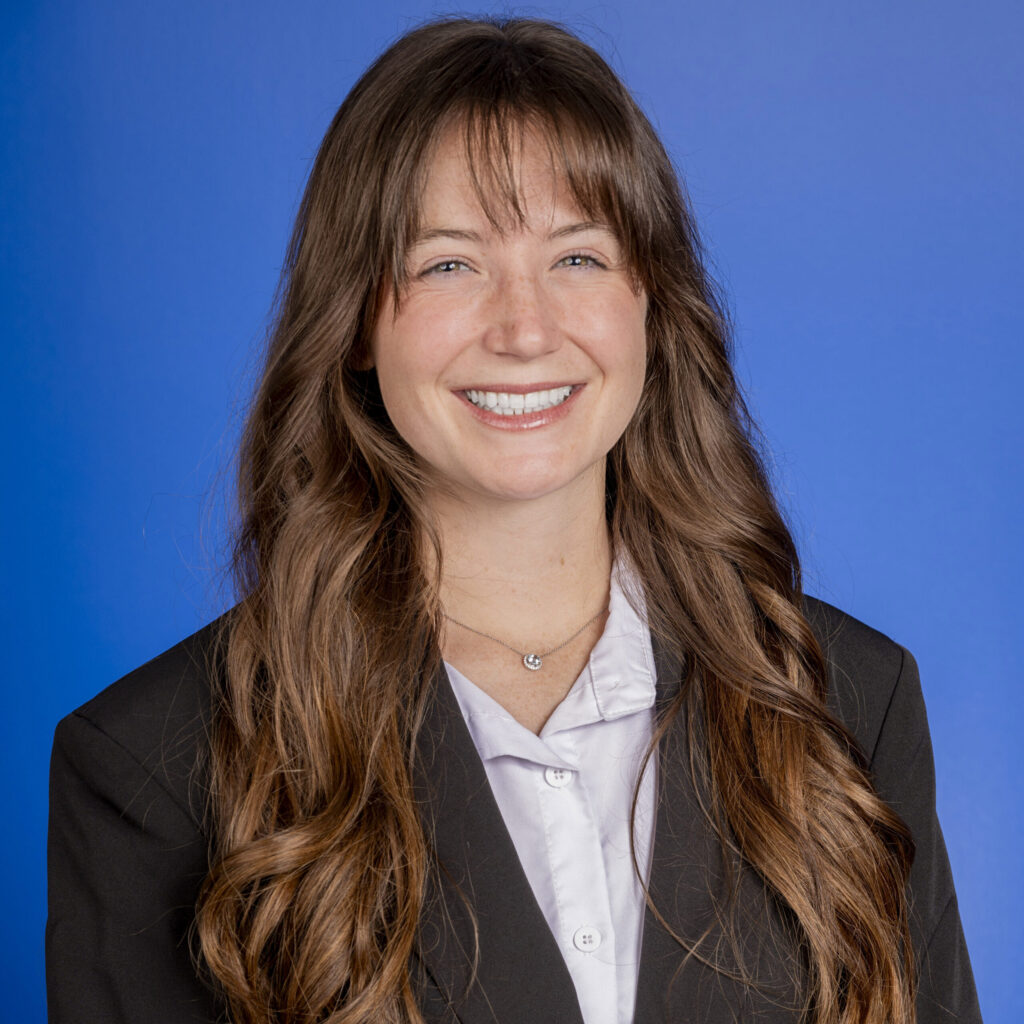
Written by: Guadalupe Quintana, PR Intern
Recently, I had the opportunity to attend the PRSA Phoenix 12News Media Panel on behalf of 10to1PR, where reporters and producers pulled back the curtain on what it actually takes to earn coverage.
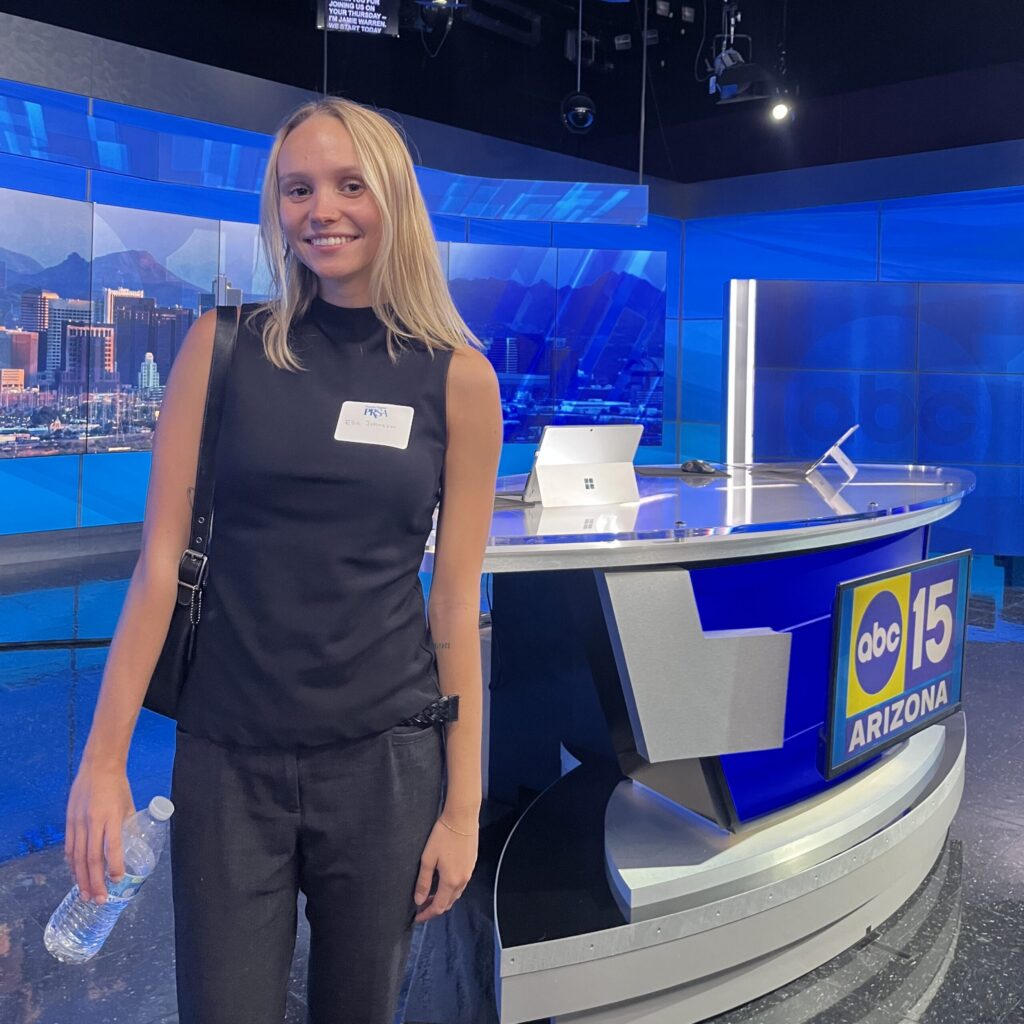
Before the panel began, we toured the 12News studio and got an up-close look at the anchor desk, control room, kitchen where they do on-air cooking segments and more, seeing firsthand the space where stories come to life every day.
The conversation that followed felt even more tangible after seeing the environment reporters and producers work in. The panel was candid, fast-paced and full of practical insight that has already shifted the way I think about pitching.
Here are the key takeaways that stood out most:
Make The Media’s Job Easier From the Start
Reporters, producers and assignment editors receive 900 to 1,000 emails a day while managing shifts with sometimes only two to three reporters and a small photography crew on site. Every second counts. For TV pitches especially, lead with the visuals, times, dates and the interview subject right at the top. Keep the five W’s: who, what, where, when and why, clear and upfront. If the pitch requires digging, it likely gets skipped.
Do Your Homework Before You Hit Send
Not every story fits every reporter, and not every reporter fits every story. Some avoid business promotions. Others are drawn to human interest angles and love being the first to break a story. Knowing a reporter’s beat, their show and their audience before pitching is the difference between a response and radio silence. Something as simple as saying “I thought you’d be interested in this” signals that you took the time to research their work, and reporters notice.
Be Accessible — Always
Accessibility was one of the biggest pain points reporters raised. Deadlines move fast, and a same-day turnaround is not uncommon. Being easy to reach and quick to respond is one of the simplest ways to earn a spot on a reporter’s short list. The panel also emphasized prepping clients well. A strong first impression in an interview can turn a one-time feature into a recurring expert relationship.
Producers Matter Just as Much
Producers are a key piece of the puzzle and are often overlooked. Understanding their needs and building those relationships is just as important as connecting with reporters.
Going forward, I plan to research every contact before pitching, keep communication tight and focused, and make accessibility a priority for both myself and my clients. I also want to make sure every pitch leads with a clear visual and a strong human connection, because those two elements are often what make a story feel worth telling on air.
In team meetings and brainstorming sessions, that means bringing questions like:
What does this look like on screen?
Who is the person at the center of this story and why does their experience matter to the viewer?
What is the most visually compelling part of this story?
Is there an action, event or moment a reporter could witness or participate in?
Asking those questions early, whether in a meeting with a lead or directly with a client, helps build a sharper, more focused pitch before it ever reaches a reporter’s inbox.
This panel was a strong reminder that great media relations are built on preparation, respect for people’s time and a genuine investment in the relationships behind every story.
10to1PR Sweeps AMA Phoenix Spectrum Awards Public Relations Category
The American Marketing Association Phoenix chapter named 10to1PR the winner across all four public relations categories at its annual Spectrum Awards. The Scottsdale-based agency earned recognition in the Local PR, National PR, Press Kit and White Paper categories, with each campaign delivering measurable, research-driven results for B2B clients competing in demanding markets.
Local PR Winner: Bringing Semiconductor Careers to Life
ASM, a global semiconductor equipment manufacturer with nearly 50 years of operations in Arizona, needed to build community awareness around workforce development at a critical moment. When SEMICON West came to Phoenix for the first time in its 50-year history, 10to1PR launched a campaign around ASM’s “From Sand to Stars” exhibition at the Arizona Science Center. The campaign secured live segments on all four major Phoenix television stations and earned ASM’s first-ever feature in the Arizona Republic. Coverage reached an estimated 14.4 million people through 30 unique media placements, and more than 7,300 visitors attended the exhibition, including 5,700 students from 50 low-income Phoenix-area schools who attended through ASM-sponsored field trips.
National PR Winner: When Policy Is the Product
Dental industry leaders faced a legislative fight to advance the Interstate Dental and Dental Hygiene Licensure Compact against a competing model. 10to1PR recommended a national poll of 1,863 registered voters to ground the campaign in data. The results were clear: 82% of Americans said dentists should demonstrate practical skills before receiving a license, and 57.1% opposed removing hands-on testing requirements. Those findings shifted the debate from an internal policy dispute to a public-interest story about patient safety and state authority. Louisiana became the first state to adopt the compact. Mississippi passed it through both chambers. Oklahoma advanced it through the House. The campaign secured 145 media placements across nine states, while the competing compact passed in only two of the 18 states where it was introduced.
Press Kit Winner: When Speed Defines Success
Rosendin Electric had four months, one available executive and only two approved press releases to introduce a solar construction robot before a May 2025 deadline. 10to1PR built a press kit that translated a technically complex product into a story about faster installation, improved worker safety and real-world construction expertise. That press kit helped Rosendin secure 140 media stories, nearly triple the original target of 50 placements, and reached an estimated 472 million people. By July 2025, Google’s AI Overview cited Rosendin in solar robot search results, extending the campaign’s impact long after the launch window closed.
White Paper Winner: When Data Leads the Story
JobElephant, a recruitment advertising technology company serving higher education, used five years of proprietary data from more than 1,000 colleges and universities to answer a pressing market question: were DEI hiring trends actually declining? The data told a different story. Diversity advertising increased from 2019 to 2024, and states with DEI-restricting legislation showed only a slight downward trend compared with states without such laws. The resulting white paper earned coverage in University Business, citybiz and Business Intelligence Journal and became a lead generation asset on JobElephant’s website, adding direct business value to the communications effort.
What These Wins Reflect
Each winning campaign replaced assumption with research and produced outcomes with clear business value. For B2B companies evaluating their communications strategy, the results share a consistent message: public relations built on evidence, disciplined messaging and precise execution delivers results that last well beyond the campaign itself.
From Ghosted to Getting Coverage: My Internship at 10to1PR
Written by Ella Johnson, PR Intern at 10to1PR
My first pitch went nowhere. No response. No acknowledgment. Nothing. I sent it out, checked my inbox, and waited. Still nothing. By the time my internship at 10to1PR came to a close, my last pitch landed multiple opportunities for the client.
That gap between those two moments is the story of my internship and it was never about perfection. It was about growth.
From learning the craft of pitching to stepping into a client lead role, my time at 10to1PR gave me two things that matter most at the start of a PR career: real skills and real opportunity. Together, they built a foundation I never expected to find in an internship.
The Craft of Pitching: Learning It the Hard Way
When I started, I thought a good pitch was a well-written one. I quickly learned it is much more than that.
10to1PR introduced me to Smart Brevity, a framework that teaches you to lead with what matters most in the fewest words possible. The goal is to create a pitch filled with newsworthiness, emphasizing the relevance and uniqueness of the story. Every pitch I wrote became sharper because of it. More importantly, I learned to tailor every pitch to the individual reporter — their beat, their recent stories, and the specific audience they serve. A pitch that works for a local Arizona outlet will not work for a national business publication, and I learned to tell the difference.
One of the most valuable lessons came from the “hit singles, not home runs” mindset. It sounds simple, but it completely changed how I approached my work. Instead of chasing one big feature, I focused on building consistent, meaningful coverage across the right outlets. That steady approach is what eventually led to wins for the clients.
Tracking newsletters was another tool I leaned on throughout the internship. By monitoring what journalists and editors were covering, I could position clients ahead of the news cycle rather than behind it.
Real Clients, Real Growth
Nothing prepares you for PR work quite like diving headfirst into unfamiliar industries. At 10to1PR, I worked across a range of clients that pushed me to learn quickly and think strategically.
AVANA Companies was my first real lesson in patience and adaptability. Private credit is not a world most college students walk into prepared for, and I had to put in the work to understand the industry before I could find the right story angles. It made me a better researcher and a more careful writer.
With the Arizona Office of Economic Opportunity, a workforce development organization and the first state agency I’ve worked with, I developed an appreciation for mission-driven storytelling and local Arizona media. The work felt meaningful, and it sharpened my ability to write for community-focused audiences. We provided OEO’s monthly job reports to Arizona media outlets, showing how this is a reliable source for employment projections and workforce development.
Kolbe Corp became my confidence-builder. This organization focused on workplace productivity and natural strengths through their Kolbe Index. I wrote the majority of my pitches for Kolbe Corp, tapping into trends around artificial intelligence and workplace behavior to find story angles that connected the brand to what journalists were already covering. I shared ideas during meetings and, for the first time, felt like a real contributor to the team.
360 Adventures, a tour guide based company in Arizona, gave me my first experience as a client lead, where I was responsible for managing client communications and pitching the brand at the Publicity Summit. During this event, we had the opportunity to pitch 360 Adventures to reporters face-to-face. I learned to think on my feet and be prepared for follow up questions without skipping a beat.
Yom HaShoah was the first time I served as the sole client lead, and it gave me a new level of ownership over my work and my professional identity.
Opportunities That Changed the Trajectory
The skills I learned in the office mattered, but the opportunities 10to1PR provided outside of it changed the direction of my career.
Attending the Valley Publicity Summit was a turning point. For the first time, I was learning media relations face-to-face — talking to journalists, understanding what they look for in a pitch, and seeing the relationship between a PR professional and a reporter in real time. The ABC15 media panel gave PR professionals the chance to ask reporters questions directly, and I left with a perspective that no classroom had ever given me.
The Copper Anvil Awards put me in a room full of PR professionals who had built careers I admired. The DSV Groundbreaking ceremony taught me what it means to be a PR professional on event day — the preparation, the presence, and the pivots that happen when the cameras are rolling. That experience directly informed how I approached my first client-lead media campaign.
Professional development was built into every layer of the internship. I was introduced to PRSA, which led me to join their mentorship program. I earned four certifications through Muck Rack and attended multiple webinars to sharpen my understanding of the platform. The team also coached me on strengthening my LinkedIn presence, which opened new professional doors along the way.
Monthly Lunch and Learns, team workshops, and collaborative brainstorm sessions made the culture at 10to1PR one where learning never stopped. A 10to1PR team member taught the team about the importance of Research, Planning, Implementation, Evaluation (RPIE) in media campaigns. Utilizing her presentation from the Lunch & Learn, I applied RPIE to my first media campaign. There was also a healthy dose of friendly competition — every time a teammate shouted out a win, it pushed me to work harder for my own clients. The escape room reminded me that the best teams win together.
A Foundation Worth Building On
My biggest takeaways from this internship are patience, adaptability, and the kind of confidence that only comes from actually doing the work.
I came in not knowing how to pitch. I left having secured real media coverage for real clients across industries I had to study to understand. Every pitch I wrote, every client meeting I sat in on, and every opportunity 10to1PR extended to me contributed to what came next.
That foundation led directly to landing a full-time position at another PR firm.
I am grateful for every person on the 10to1PR team who invested in my growth. You gave me more than an internship. You gave me a career.
6,000 Names, One Campaign: What I Learned Leading My First PR Project
Written by Ella Johnson, PR Intern
Some campaigns are about product launches. Some are about grand openings. This one was about honoring lives.
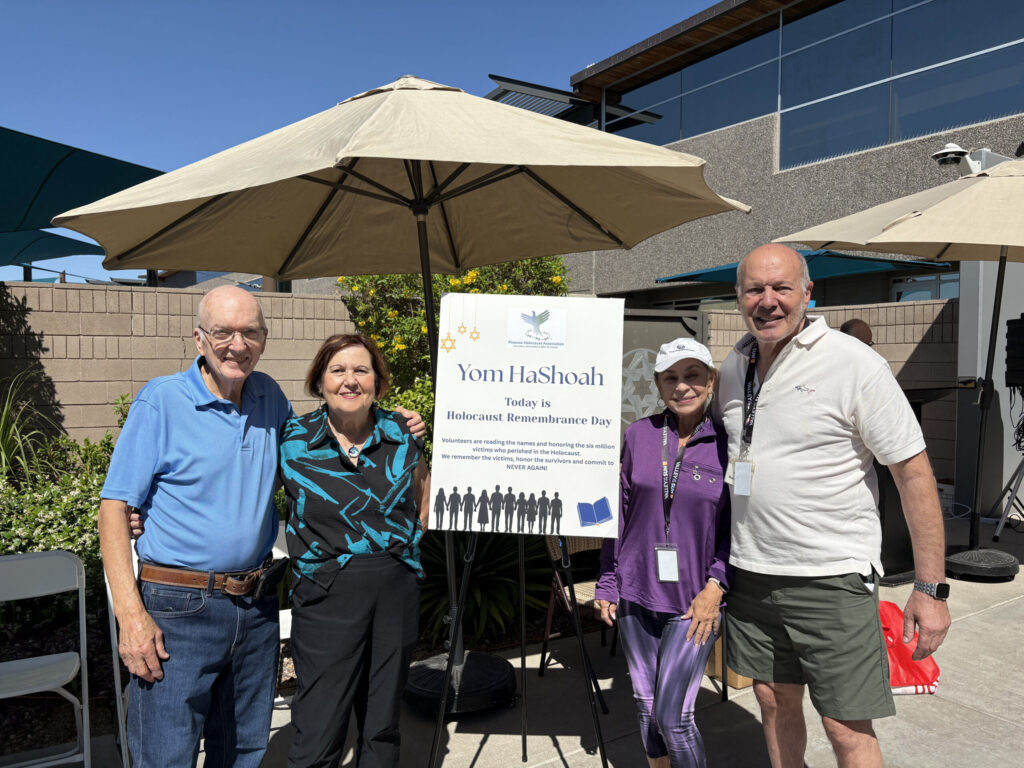
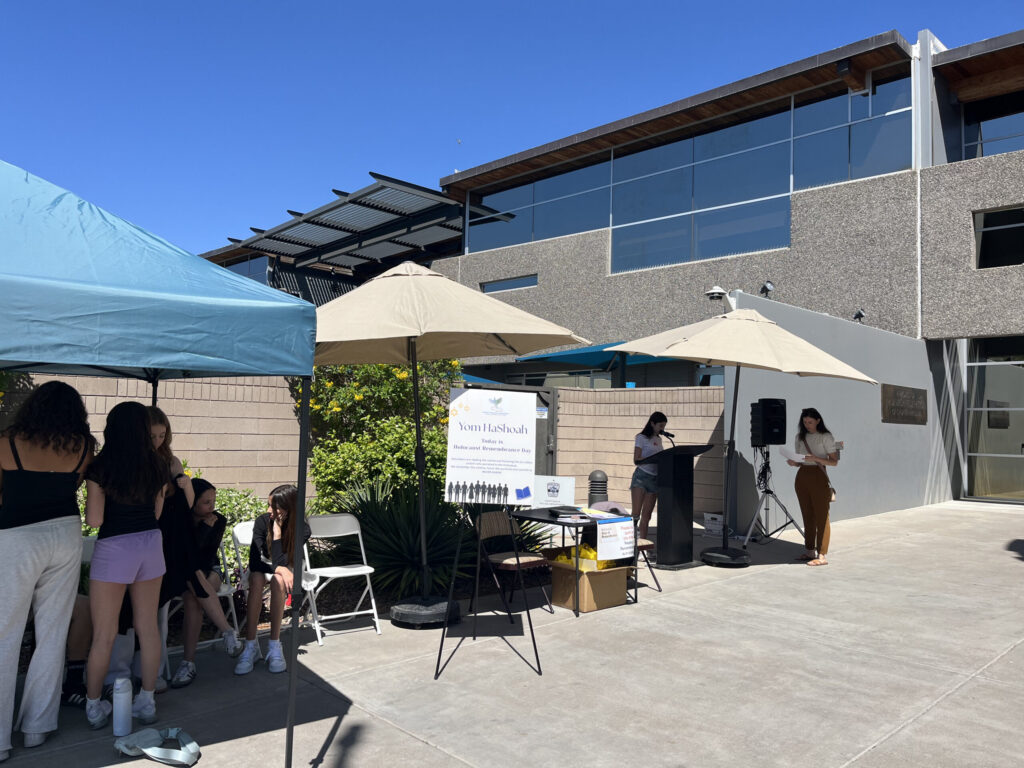
On April 14, 2026, from 8 a.m. to 6 p.m., volunteers gathered around a local community center in Scottsdale to read approximately 6,000 names of Holocaust victims aloud for 10 straight hours. These names represented only one-tenth of 1 percent of the 6 million Jews murdered during the Holocaust. The event was organized by Hana Lange and Frank Lange, with Sheryl Bronkesh, former president of the Phoenix Holocaust Association present to support and engage with the media. The mission was as clear as it was moving: to teach, to remember and to never forget. Helping to turn a statistic into a real person.
As an intern at 10 to 1 Public Relations, I served as client lead for this campaign, with support from other 10to1PR team members. Through this experience, I learned about how to lead a PR campaign from start to finish, client communications and media relations.
Knowing your strengths and constraints
Before any outreach began, the team conducted a SWOT analysis to understand what we were working with. This entails looking at this campaign’s strengths, weaknesses, opportunities, and threats.
Strengths
The strengths included strong community involvement, including middle schoolers from the nearby school. They read the names of the children who lost their lives, educating younger generations about the severity of the Holocaust.
During the event they read approximately 6,000 names which represents only 1/10 of 1% of Jews murdered in the Holocaust. This statistic was impactful and showcased the severity of this tragedy. Certain reporters lean toward stories that incorporate statistics into their pitch. Other reporters appreciate the human element and family engagement within a story. Part of the event was the event volunteers read names of their own family members who perished, giving them back their voice and recognition.
The name-reading event had elements of statistics and community involvement strengthening its chances of securing coverage.
Weaknesses
In recent events, synagogues and Jewish affiliations have been attacked, creating safety concerns for the name-reading event. For this reason, we asked the media to agree to an embargo until after the event had concluded. This was considered a weakness because we could not reveal the location of the event to the media. I had to find ways to work around the security concerns and needed the media to understand why certain information could not be exposed.
Opportunities
This is where researching opportunities comes into play. Sentimental interviews with the organizers and the former president of the Phoenix Holocaust Association, both of whom had parents who survived the Holocaust. This gave us compelling human interest stories to pitch reporters.
Another opportunity that started out as a weakness was the middle schoolers’ participation in the reading. At first, the event organizers were concerned about the sensitivities around having kids on-camera and getting their parents’ permission. However, we saw this as a great visual opportunity that shows how the event educates the younger generation about the Holocaust, in real time. To turn this visual option into a reality, we worked with the school to have the kids’ parents sign media waivers ahead of the event, ensuring we had the right permissions and could include the students in the story.
Threats
The last step is understanding the gravity of the threats in our SWOT analysis. In this instance, the main threat was the possibility of protests, disruptions or even attacks during the reading. As the client lead it was my job to validate the client’s concerns.To alleviate this threat, we directly established the importance of the embargo to the media. I also kept consistent communication with the client via email, phone call, and text. Understanding the client’s concerns and addressing them head on showed him that I am reliable and proactive.
Putting RPIE to Work
Every successful PR campaign follows the RPIE model: research, plan, implement and evaluate.
Research
Research started weeks before the event, learning the history and significance of the event. In my research stage, I learned about the ceremonies performed on Holocaust Remembrance Day, the lighting of the yellow candles, the alarms, and hosting Holocaust survivors to share their stories. Utilizing a quick google search is a great start, but having a conversation with the organizers deepened the core message and led to the planning stage of the process.
During this conversation, I learned that the number of names they will read represents only a small fraction of those who died in the Holocaust. We ended up using this statistic as a compelling hook for our pitches.
Hearing the client’s story and their connection to the event helped me understand the gravity of the name-reading event.
Planning
The planning stage is where the strategy takes shape. Using the research gathered, we identify target audiences and map out the tactics we use to reach them. This includes building a media outreach calendar, coordinating a pre-event site visit and drafting materials such as pitches, follow up emails, media alert, and the post-event press release. We drafted those in advance so approvals would not delay execution. The team also built a targeted media list focused on television and digital reporters whose beats aligned with the community and education story at the heart of this campaign.
Figuring out the distribution schedule was essential to securing coverage. The pitches were sent first to grab the reporter’s attention, next was distributing the media alert, acting as a reminder. The last step is releasing the post-event press release a few days before the event which gave the media outlets all of their essential information.
As part of the planning process, the team visited the venue with the organizers to get a walk-through demonstration of the event.
Implementation
The implementation stage utilizes the materials created from the planning stage; pitches, pre-event media alert and the post-event press release. I followed the media outreach calendar sending the pitches and media alerts to reporters.
One of the tactics used was TV cold calls to television newsdesks; scripts are helpful for explaining the purpose of the call. Consistency is key, continue to follow up with reporters, and show why they need to cover this story.
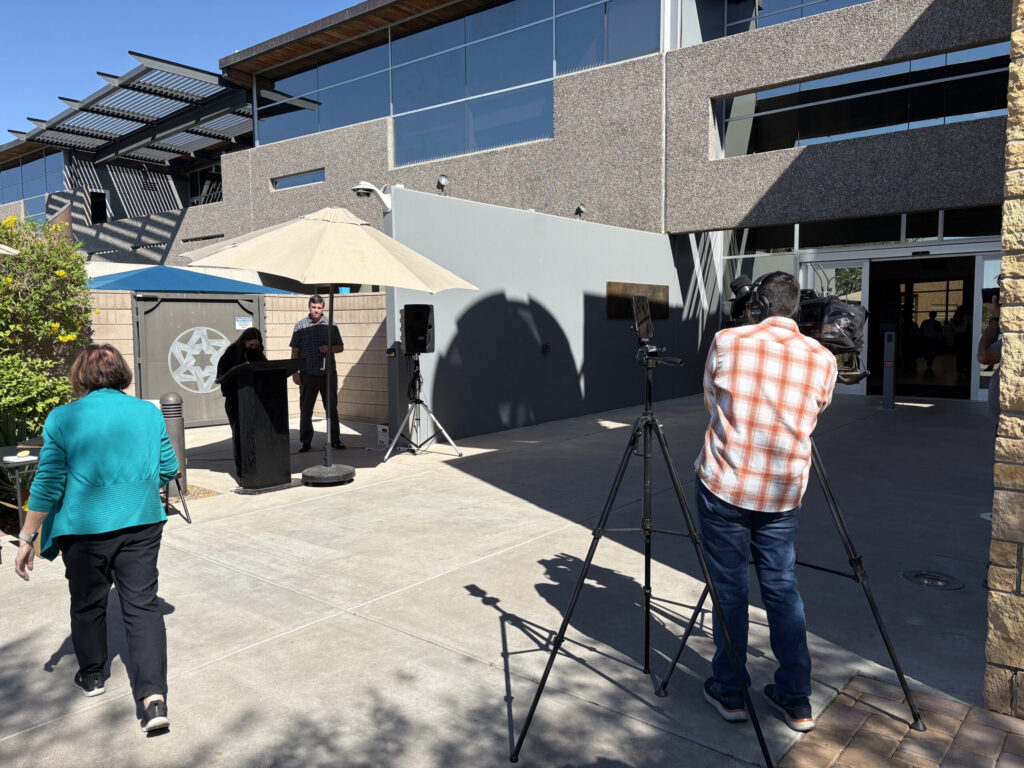
On the day-of I emailed and called TV newsdesks as a final reminder of the event. Interviewing the organizer and the former president of the Phoenix Holocaust Association separately from the press, collecting visuals, and distributing the media alert and press release made it easier for reporters.
For post-event distribution, I sent the post-event press release alongside visuals and interviews to reporters and their newsdesks. Continued to follow up after the event concluded and pitched the press release to other digital outlets.
Evaluation
The evaluation phase included reporting out our campaign’s results and reflecting on what worked well and areas for improvement for the next campaign.
As for results, I secured coverage from 12News, Jewish News of Greater Phoenix, Signals AZ, Times Media Group, and interest from ABC15.
The evaluation also confirmed what worked in the media campaign. From my perspective TV cold calls and emailing the newsdesks were the most effective tactic. Following up on multiple occasions and collecting essential information such as interviews, quotes, visuals, and b-roll footage for reporters helped with the success of the campaign.
By putting RPIE to work I secured coverage and instilled trust with my client and reporters.
What I learned about Client Communications
Before this event, I was used to being the one getting CC’d on client emails, but for this campaign, I was the client lead and point of contact. Working with the clients taught me that effective communication begins before the first pitch is written. Ask what their preferred way to communicate is — phone, email, or text. This eliminates any miscommunication or confusion. For this client, phone calls were the most effective as we could get direct answers and communicate openly.
Throughout this internship, I have surrounded myself with people who understand PR “lingo” such as a media alert, press release, and the overall process of media relations. By talking with the client, I learned the need to set clear expectations about how media and PR work. Describing the reality about the relationship between PR professionals and the media helped set expectations for the client. A team member at 10to1PR taught me that media relations can be compared to a one-sided friendship sometimes. In which a PR pro will initiate communication first and propose an event, hoping the media will prioritize your event.
Clients care deeply about what they put out into the world. Approvals for the media alert, press release, and visuals took time, not because anyone was difficult, but because this event meant everything to the people who organized it. Understanding that changed how I received feedback. My role was to reduce their stress, accept their direction and help make their vision shine.
What I learned about Media Relations
Reporters receive hundreds of pitches, which means picking the right reporters to pitch matters just as much as writing the pitch itself.
An investigative reporter or a sports journalist will not cover a name-reading ceremony. A community or education reporter will at least open the email if the subject line is right. Targeting the right journalists is step one.The next step is to find two angles that matter most and pitch them with confidence.
I found that the two angles that broke through were the statistics about the 6,000 names read, which represented only one-tenth of 1 percent of the lives lost and the b-roll footage of middle schoolers reading the names of children who perished. Once the angles have been established, it’s time to write the perfect pitch.
The perfect pitch differs for TV reporters compared to digital reporters. For instance when pitching a TV reporter they gravitate towards available visuals to capture their b-roll footage. When pitching to digital reporters focus on interview opportunities, this way they can collect quotes from your interviewee. Both pitches should include a hook, why this matters, and the two angles.
The next step is consistent follow-up and, no, you are not being annoying, you are doing your job. News is constantly changing and priorities change. I learned that nothing is confirmed until the day of the event, and the news cycle changes by the hour. There could be breaking news at the exact time the event starts.
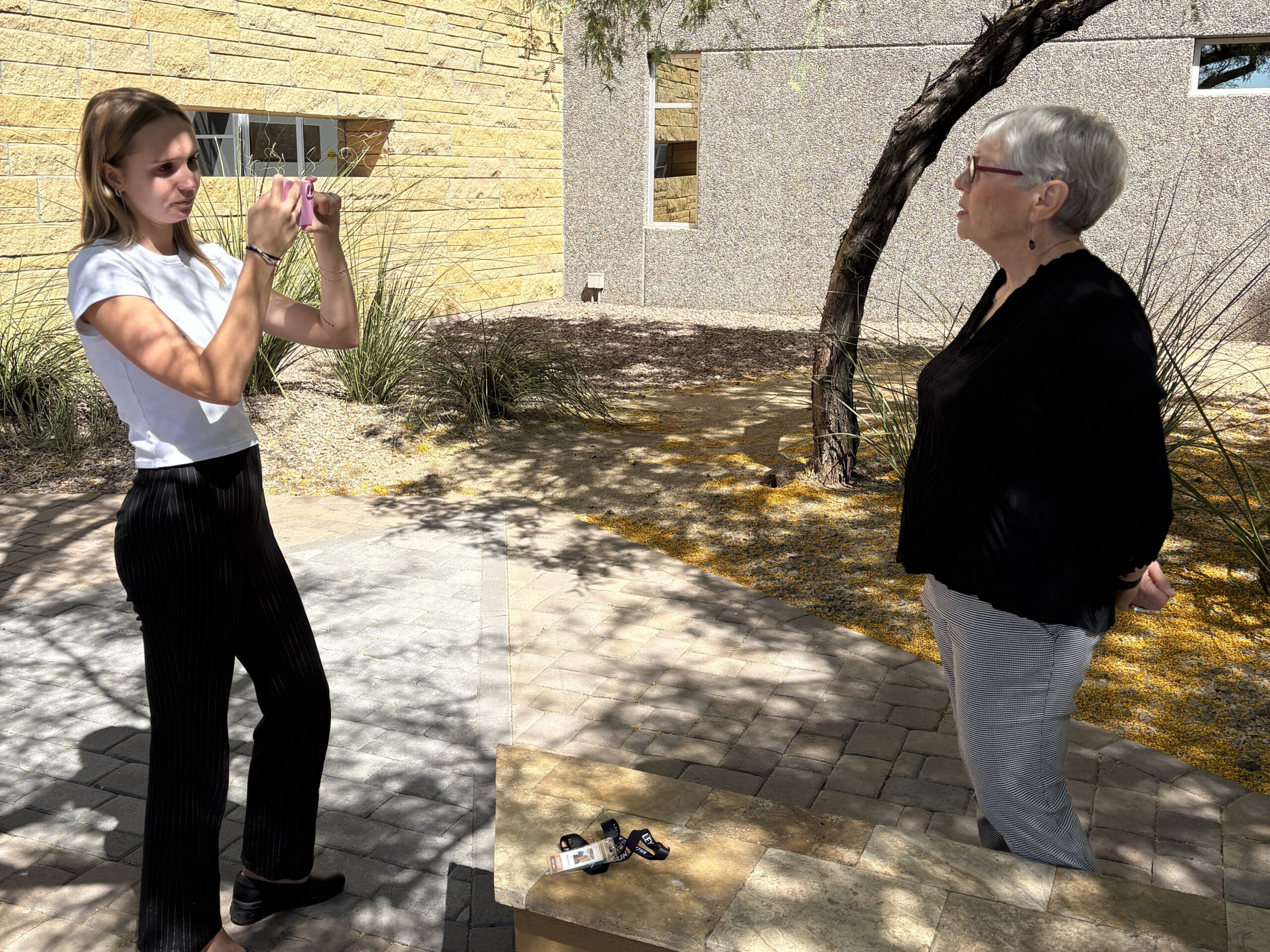
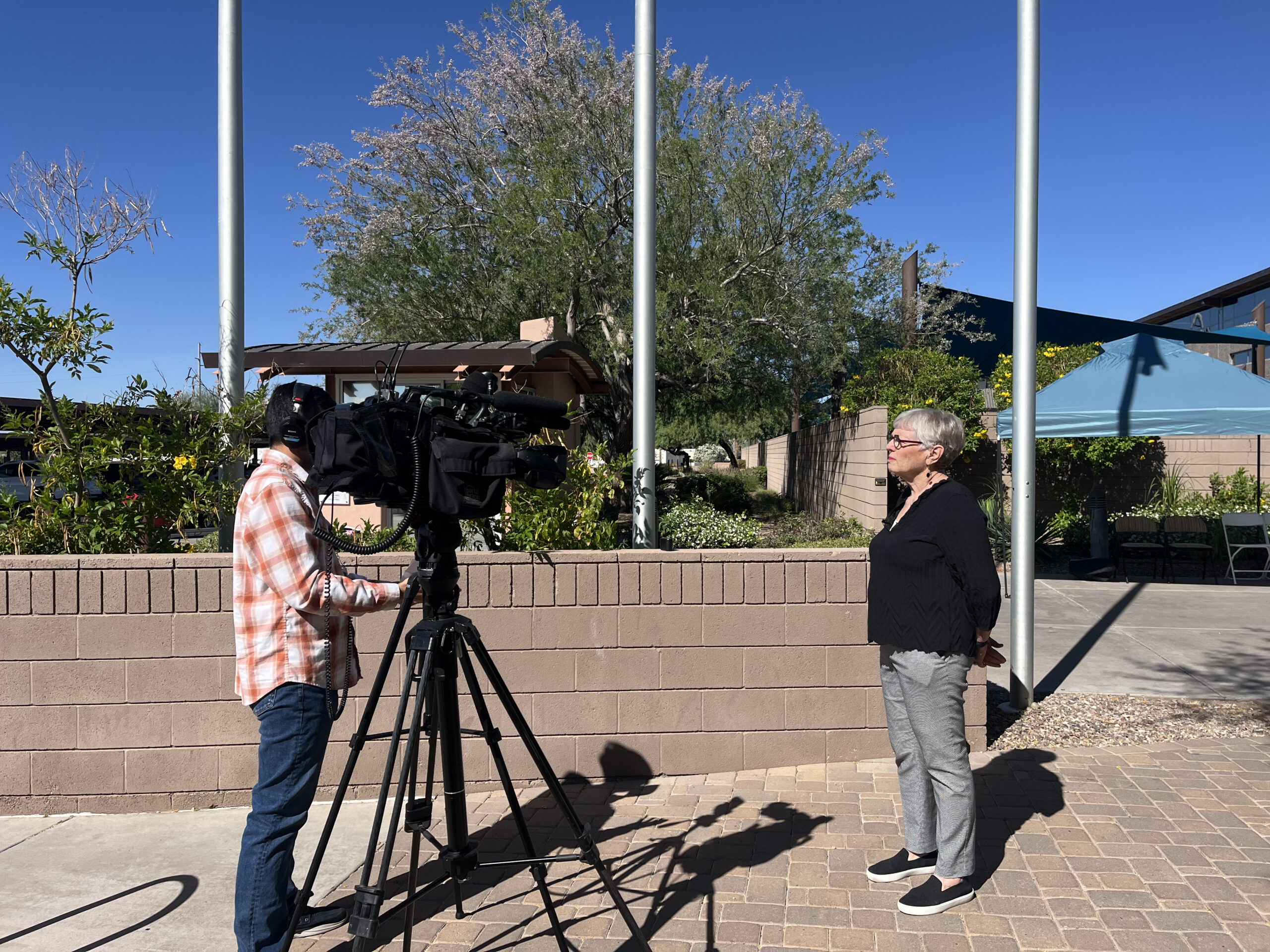
Demonstrating adaptability shows your client and the media that you are a reliable source and a PR professional. That morning, I was still calling TV stations confirming arrival and sent out the last follow up emails before arriving at the site. Once the 12News camera person arrived, priorities shifted to getting them acquainted with the event. In this instance, it was connecting the former President of the Phoenix Holocaust Association and the reporter waiting to interview her.
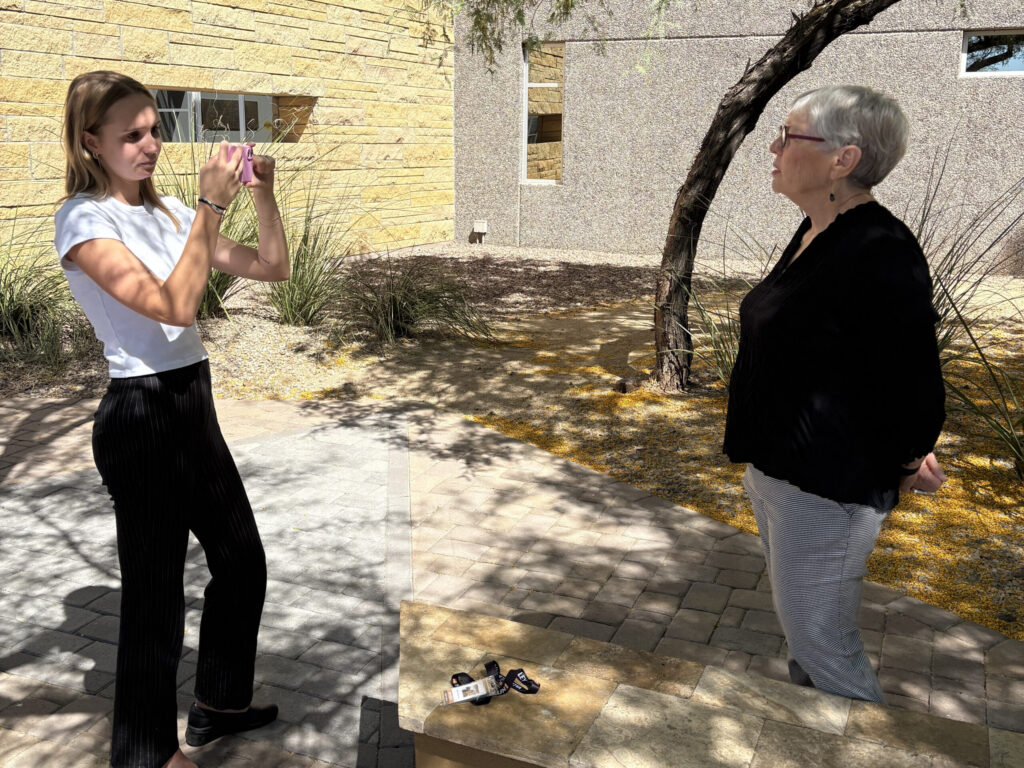
As the event proceeded, I captured my own visuals, conducted interviews, and gathered quotes to distribute afterward. This is ideal for reporters who are unable to attend the event in person. Stepping into the role of a one-person production team when the story demands it.
What I learned about myself
During the process, I learned what I can control and what I cannot control. I cannot control whether a reporter shows up, but I can control my actions to get them to show up. Picking the right media targets and tailoring my pitches to reporters ensures I’m doing what I can to make the event interesting and newsworthy for them personally. I can also control my demeanor and preparation for the arrival of reporters. I am a helping hand for the client and the media to connect with one another.
I also learned TV cold calls are not as scary as I anticipated. A clear script and two strong angles are enough to hold a conversation and spread the word about an upcoming event. The most important lesson from this campaign: When I am calm, my client is calm. That is not a small thing.
It is important to show your support at the event you’re covering. By listening to the names read, I felt the realness and tragedy of the lives lost. This event is emotional for the community and the client. I learned that emotional support, even if it’s silent, demonstrates that this is not a transactional relationship, but one of support and caring about telling the story the way they want it told..
What I Will Apply to My Next Campaign
For future campaigns involving embargoed media or location privacy, I want to connect directly with venue leadership weeks before the event to ensure everyone is aligned before cameras arrive. It is better to over communicate then have someone left in the dark.
I want to also implement spokesperson preparation into every campaign plan as a required step. Some people are confident and composed in front of a camera, ready to relay their story. That is not always the case, and preparing talking points can be the difference between a good interview and a great one. Setting up a dedicated practice session ahead of an interview can bring the entire experience to a new level for the spokesperson and for the story.
Every one of those lessons traces back to the weight of what this campaign represented.
Six thousand names were read aloud on April 14, 2026. Each one represented a life. Each one deserved to be remembered. Helping ensure the world heard them is the kind of work that puts everything into perspective. That responsibility will shape every campaign I take on from here.
PRovoke Media’s Best Agencies list is an authoritative, merit-based selection of premier PR firms evaluated by the publication’s editors through interviews and decades of market knowledge covering the global public relations industry. Agencies are recognized based on five key criteria: rapid growth and financial performance, a track record of exceptional work, an outstanding workplace culture, thought leadership and the development of new knowledge, and innovation in the technology and tools of the profession.
“To be named one of the best PR agencies in North America alongside some of the biggest, best-known PR agencies in the world is a huge honor and credit to our talented team,” said Josh Weiss, President and Founder of 10 to 1 Public Relations. “It demonstrates that even a relatively small PR firm like ours can get noticed for quality work, a focused approach to generate consistent media visibility for clients, and through our innovative approach and investment in proprietary AI tools to give both our clients and our staff a leg up.”
In a profile on 10to1PR, PRovoke Media said it selected the agency because of its steady growth and proven ability to deliver consistent media visibility for its clients. The publication noted 10to1PR’s innovative AI approach (IVY and IVY Press Room) to support its work. PRovoke Media also recognized the agency’s collaborative culture and commitment to training and development as it integrates new tools and capabilities into its practice.
Founded in 2012, 10to1PR now serves approximately 30 clients through long-term retainer relationships across sectors, including construction, technology, financial services, transportation, real estate, home services, and healthcare. The agency builds consistent media visibility through a focused strategy of long-term storytelling and practical results. In recent years, 10to1PR has been named PR Agency of the Year in several international, national, and local competitions and has earned dozens of awards celebrating the work of its talented team. Bulldog PR Awards has also named 10to1PR the Most AI-Ready Agency, and the agency received multiple campaign awards from PRSA Copper Anvils.
10to1PR’s proprietary AI platform, IVY, streamlines research, content development, and strategic planning while supporting rather than replacing human judgment. A related offering, IVY Press Room, converts client announcements into formats optimized for discovery and citation by today’s leading AI platforms, including Google’s Gemini, ChatGPT, and Perplexity.
10 to 1 Public Relations’ Rachael Clifford, Madeleine Budge, APR, and Emily Cardone Complete Global Leadership Program
Team members complete IPREX leadership development experience focused on cultural awareness and stronger communication across markets
Program brought together 30 emerging leaders across the Americas
10to1PR is the sole Arizona member of global PR network
IPREX includes 1,100 professionals in 100+ markets
10 to 1 Public Relations (10to1PR) recognized that three of its employees, Rachael Clifford, Madeleine Budge, APR, and Emily Cardone completed the IPREX Leadership Development Conference (ILDC), a five-day virtual program for emerging leaders from IPREX member agencies across the Americas. The conference focused on building cultural awareness and strategic communication skills while helping participants examine how cultural differences shape team dynamics, message interpretation, and strategic choices.
Madeleine Budge, APR (center)
10to1PR is a partner firm of IPREX, a global network of independent communications and marketing agencies with more than 1,100 professionals in over 100 markets. The five-day virtual program brought together 30 emerging leaders from independent agencies worldwide. Participants explored self-awareness, cultural awareness, team leadership in complex environments, and strategy development through cultural insight.
Rachael Clifford
“Developing and helping our talented team members to grow professionally and personally has always been an important part of our 10to1PR culture, and we are thrilled to have had three members of our talented team participate in this year’s IPREX Leadership Development Conference,” said Josh Weiss, president and founder, 10 to 1 Public Relations. “Being part of a global network like IPREX gives our team access to wider perspectives that help us better serve clients and keep growing as an agency.”
Clifford, Budge and Cardone each completed the program at different stages of their careers with 10to1PR. Clifford has been with the agency for nearly five years and has advanced through five roles to become Account Supervisor and Internship Program Manager. Budge has been with 10to1PR for more than three years, earned two promotions and received her Accreditation in Public Relations credential from the Public Relations Society of America in 2025. Cardone has been with the agency for one and a half years and moved through three roles, from Public Relations Coordinator to now Public Relations Executive.
The ILDC was led by IPREX Executive Director Alexandra Mayhew and featured expert panels with IPREX agency principals and outside leadership specialists. Participants explored four core areas: self-awareness as a foundation of leadership, cultural awareness as a driver of effective communication, leading teams in complex environments and refining strategies through cultural insight. Those lessons support both internal team growth and stronger client service.
Emily Cardone (center)
“The ILDC is the only structured leadership program in the independent agency space focused exclusively on cultural intelligence,” said Alexandra Mayhew, IPREX Executive Director and ILDC course designer. “By bringing together emerging leaders from across the Americas to learn from experienced practitioners spanning three continents, we’re ensuring the next generation has the cultural awareness and strategic skills to serve clients in increasingly complex global environments.”
As part of IPREX, 10to1PR connects with independent agency leaders and communications professionals across global markets. That relationship supports knowledge sharing, leadership development and collaboration that can strengthen agency operations and client work. 10to1PR is the only IPREX partner based in Arizona, and one of only two in the Southwestern U.S. Learn more at https://www.iprex.com/.
Q1 Momentum: 10to1PR Clients Lead Industry Conversations
The first quarter of 2026 delivered strong media results for 10to1PR clients across diverse sectors. Our team secured coverage in national publications, industry trade journals, and local outlets, positioning our clients as thought leaders and innovators. Here’s a snapshot of our top Q1 achievements:
💡 Healthcare and Technology Advances
RX Insider showcased Swisslog Healthcare’s new Motif tabletop packager, expanding their pharmacy automation offerings.
Medical device innovation earned attention from Citeline Insights, which explored how simplified design helps medical devices reach more patients.
KUNM covered healthcare compacts addressing dental shortages, while Canadian Health Industry News featured an exclusive distribution agreement for revolutionary body-powered hand technology.
🏗️ Construction and Development Stories
Bus & Motorcoach News honored Master’s Transportation for their Kansas City headquarters investment and job creation initiatives.
The roofing industry showed its community spirit as Roofing Contractor covered Action Roofing’s partnership with the Miami Dolphins to provide a free roof to a veteran.
Your Valley featured a former electrician launching a foundation to give back to the industry, while Midwest Contractor News highlighted Helix Electric’s $5,000 donation to veterans.
📺 Local News Impact
ABC15 reported on DSV’s construction of their regional headquarters in Mesa, with additional coverage from the Phoenix Business Journal.
KTAR covered valley homelessness initiatives, while North Central News highlighted grant funding for memory care training.
💰 Real Estate and Finance Excellence
CU Times featured six strategies for managing distressed commercial real estate. Alternative Credit Investor announced the Alternative Credit Awards shortlist recognition.
Arizona’s economic landscape took center stage as our clients provided expert commentary on key trends. The Arizona Republic featured analysis on the state’s steady job growth despite a slower pace in 2025. Axios Phoenix highlighted unemployment trends, while another Arizona Republic piece explored how AI and bankruptcy impact the state’s employment landscape.
The Phoenix Business Journal showcased cross-industry collaboration driving Arizona’s economy, demonstrating our clients’ role in fostering business connections.
📈 Thought Leadership Wins
PI World featured insights on direct mail’s resurgence in a digital world. HR Spotlight published a byline from David Kolbe, while In Business Phoenix announced Arizona Builders Alliance’s new board chairman.
The first quarter of 2026 demonstrated our clients’ expertise across construction, healthcare, technology, and finance. These placements reinforce their positions as industry leaders while building credibility with key audiences.
Ready to amplify your brand’s voice? Connect with 10to1PR to discover how strategic media relations can elevate your business.
My APR journey: what I learned, what it took, and why it was worth it
By Madeleine Budge, PR Executive at 10to1PR
I spent about 18 months earning my Accreditation in Public Relations (APR) through the Public Relations Society of America. An APR is a certification that validates a PR professional’s expertise and strategic thinking abilities. The PRSA’s Universal Accreditation Board administers this credential to distinguish seasoned practitioners from their peers. The program requires five years of experience plus a bachelor’s degree in communications or equivalent work experience.
Why I Pursued APR
PR professionals seek this certification to sharpen their skills, demonstrate commitment to the field, and stand out in a competitive industry. The rigorous process challenges practitioners to think strategically and refine their execution abilities. Receiving the APR designation signals to employers and clients that you possess advanced competence and judgment in public relations practice.
For me, the APR experience stretched me in all the right ways. I came out sharper as a strategist, steadier as an advisor to clients, and more connected to peers who care about advancing the PR industry and their work as much as I do.
Building My Support Network
I leaned on the process and the people. Early on, I built a small circle of colleagues who were also pursuing the APR and a few who had already earned it. This included signing up for a mentor through PRSA’s mentorship program, joining a weekly APR bootcamp run through PRSA’s Phoenix Chapter, and connecting with various professionals who had already obtained or were working on obtaining their APR. Their notes on study habits, panel prep, and mindset kept me moving when the workload pressed.
Tackling the Panel Presentation
The panel presentation and questionnaire came first and felt natural. I was confident discussing current campaigns, walking through the plan and answering follow up questions. Presenting the thinking behind my work reminded me that strategy is a habit, not a moment.
Conquering the Computer-Based Exam
The computer-based exam was my hardest hurdle. It took me three attempts to pass. I stacked multiple study guides, flashcards and practice questions. I blocked time every week and drilled vocabulary, case analysis and application. That grind made the difference. It also made the learning stick.
RPIE: A Game-Changing Framework
Research, Planning, Implementation and Evaluation (RPIE) clicked for me in a new way. RPIE sounds simple, but applying it with discipline changed my approach to my daily work. I began campaigns with clearer problem statements, set measurable objectives tied to business outcomes, mapped publics with intent, and closed the loop with evaluation that informed the next campaign cycle. I also was able to plan and organize long-term PR strategies in a way I hadn’t been able to before.
Strengthening My Leadership Style
The APR process transformed my leadership approach by highlighting relationships as the cornerstone of effective PR. I became more hands-on with internal teams, recognizing that successful campaigns depend on every team member seeing the bigger picture. Now I over-communicate campaign goals, ensuring everyone understands not just what we’re doing but why it matters to the organization. I’ve learned to steer teams with clear objectives, specific tactics, and detailed plans where each person recognizes their exact role.
This clarity builds confidence and ownership for myself and others. Relationships matter profoundly, whether they’re with internal colleagues, clients or media contacts. Building trust through consistency, transparency, and mutual respect creates the foundation for everything we accomplish. The strongest PR professionals invest time nurturing these connections before they need to activate them during high-stakes moments.
Understanding PR’s Strategic Role
In addition, I learned that PR works strongest and most effectively when it has a seat at the table, directly advising and counseling CEOs. I better understood how all roles in a company must work together and consider each other’s responsibilities when making decisions. The collaboration between legal, marketing, advertising, finance, and IT teams requires clear communication about priorities and constraints.
Sharpening PR Specific Skills
The APR process refreshed and strengthened my crisis management skills, reinforcing that effective preparation begins in calm times. Through the coursework, I revisited techniques for early issue identification, protocol development without emotional pressures, and scenario planning with leadership. These capabilities prove invaluable when actual crises unfold, enabling more precise thinking, messaging and reputation management when stakeholders seek guidance.
Organizations that navigate crises successfully typically have PR professionals who master both immediate response and long-term recovery strategies. The ethics and law components provided valuable insight on First Amendment applications, privacy regulations, disclosure requirements, and fair use principles. In addition, learning PR history gave me a fresh perspective on how today’s communication channels evolved and why certain approaches resonate with modern audiences.
Know What You’re Getting Into
If you are considering the APR, know what it covers and why it matters. The exam leans heavily on RPIE at 30%, then leadership at 20%, relationships at 15%, ethics and law at 15%, issues and crisis at 15%, and theory at 5%. The process signals mastery in research, planning, implementation and evaluation, crisis counsel, relationship building and ethics. It builds credibility, deepens knowledge, and supports career growth as a strategist and mentor. You apply, present your work to a panel, sit for the exam, and renew every three years to stay current.
Habits That Made the Difference
A few habits helped me:
Join a study cohort and find a mentor who has the APR.
Practice presenting your planel presentation multiple times in front of an audience.
Study to apply, not memorize. Tie every concept to a real decision.
After a setback, pause, review weak areas, and reset your plan.
APR as a Career Standard
The APR is not a finish line. It is a standard you carry throughout the rest of your career. Take your time to learn each concept and new skill. If you need to retake steps in the process, so be it. Mastery is the key.
Breaking Ground: How PR Teams Turn Construction Milestones into Brand-Building Moments
By Ella Johnson, PR Intern
What is a groundbreaking ceremony?
Groundbreaking ceremonies mark significant milestones in corporate expansion and community development. These events bring together stakeholders, employees, local officials, and media to celebrate new investments and partnerships. Company leaders use the occasion to recognize key contributors and share their vision for the project’s impact on the local economy and workforce.
The ceremony serves multiple purposes beyond celebration. It demonstrates corporate commitment to a community, introduces company values to new neighbors, and provides transparency about upcoming construction timelines.
Local officials often participate to highlight economic development benefits, while employees gain insight into their company’s growth trajectory. Media outlets cover these events to report on economic development, job creation, and business expansion news that affects their communities.
From my perspective:
PR plays an important role in gathering media coverage for a groundbreaking ceremony. As a PR intern at 10to1PR, I got to witness firsthand how a public relations team brings this all together. I attended the DSV groundbreaking ceremony that celebrated the new facility that would house all divisions of the company. DSV is a 10to1PR client that focuses on logistics and global transportation.
Our PR team was in charge of contacting various media outlets to attend the event and helping media get situated once they arrived. To help prep spokespeople for interviews and keep messaging consistent, the PR team drafts talking points, strategically telling a complete story about the project.
I got to see the payoff of planning, the engagement during the event, and how the media plays into groundbreaking ceremonies. Watching our public relations team in action taught me that detail-oriented planning goes a long way. They guided reporters to the best spots for photos and handled the media throughout the event.
The goal is to create excitement about what’s coming while showing respect for the community you’re joining. When it works, everyone walks away understanding why this matters.
The PR playbook
PR professionals orchestrate the media outreach and craft a story that makes groundbreaking ceremonies newsworthy. Their work starts weeks before anyone picks up a shovel.
10to1PR team members targeted specific media that would align with the reporter’s specific beat. For DSV’s ceremony, the team focused on supply chain reporters who understand warehouse and logistics stories. They reached out to Mesa-area outlets for local coverage and business reporters specializing in real estate and semiconductor growth.
The outreach timeline follows a proven pattern. Media alerts go out two weeks before the event. Follow-up phone calls explain the news value and logistics. The team makes additional calls leading up to the ceremony, including check-ins the afternoon before and morning of. After the event, our team distributed the press release for DSV showcasing the value of the groundbreaking ceremony.
Flexibility matters on event day. Reporters cancel when bigger stories break. Others arrive unexpectedly after hearing about the event. PR pros juggle these changes while keeping the program on schedule and ensuring every outlet gets story material.
Increasing Brand Value through Media Outreach
Our PR team knows that meticulous preparation, strategic planning, and real-time adjustments separate memorable brand moments from forgettable photo ops.
The next time your company breaks ground on a new facility, remember what makes these events work. Target the right reporters who care about your industry and location. Start your outreach early and follow up consistently. Plan for the unexpected on event day.
Master these fundamentals, and you’ll turn every construction milestone into a celebration that strengthens relationships and builds lasting brand value. The stakeholders, employees, and community partners will notice the difference between a rushed announcement and a thoughtfully executed event that tells your company’s growth story.
The team at 10to1PR has set ambitious targets for 2026 that blend professional growth with personal wellness. Our roadmap focuses on leadership development, work-life balance, and skill enhancement while maintaining the creative storytelling and strategic communications that earned us recognition as the Most AI-Ready Agency.
Leadership Sets the Pace
Vice President Erica Fetherston plans to expand into public affairs campaigns for clients while chasing a winning record on her tennis team. Vice President Laura Slawny has committed to making more time for family and friends in the year ahead.
Building Tomorrow’s Leaders
Account Supervisor Rachael Clifford aims to master people management and team unification around shared goals. She’s also diving deep into effective ways to manage teams that use AI technology.
Public Relations Executive Emily Cardone will focus on leadership development skills, while Public Relations Executive Madeleine Williamson plans to become a stronger people leader.
Senior Public Relations Coordinator Gabriel Estes wants to take on more leadership roles in client work to prepare for managing his own clients individually in the future.
Finding Balance
Senior Public Relations Executive Danielle Baker has set her sights on achieving better work-life balance. She believes this balance will positively influence how she shows up for colleagues and clients while allowing her to be more present with family and friends.
Growing Our Talent
Public Relations Coordinator Jonathan Melendez will grow and develop in his new role while focusing more time on fitness goals and hobbies outside of work.
Public Relations Coordinator Amanda Lundin plans to enhance the PR skills she learned in school at 10to1PR. Her personal goal includes daily movement, aiming for an average of 10,000 steps a day.
Public Relations Coordinator Lauren Sanders will develop stronger client relations and leadership skills, along with building more relationships with journalists.
Senior Public Relations Coordinator Morgan Ray wants to be more present and not rush through things as much.
What’s Next
These goals reflect our team’s dedication to both professional excellence and personal fulfillment. As we enter 2026, the 10to1PR team is ready to grow stronger together while delivering exceptional results for our clients.
The blend of leadership development, work-life balance, and skill enhancement shows a team committed to sustainable success in the year ahead.