
How to prepare employees for a deepfake attack

How to prepare employees for a deepfake attack


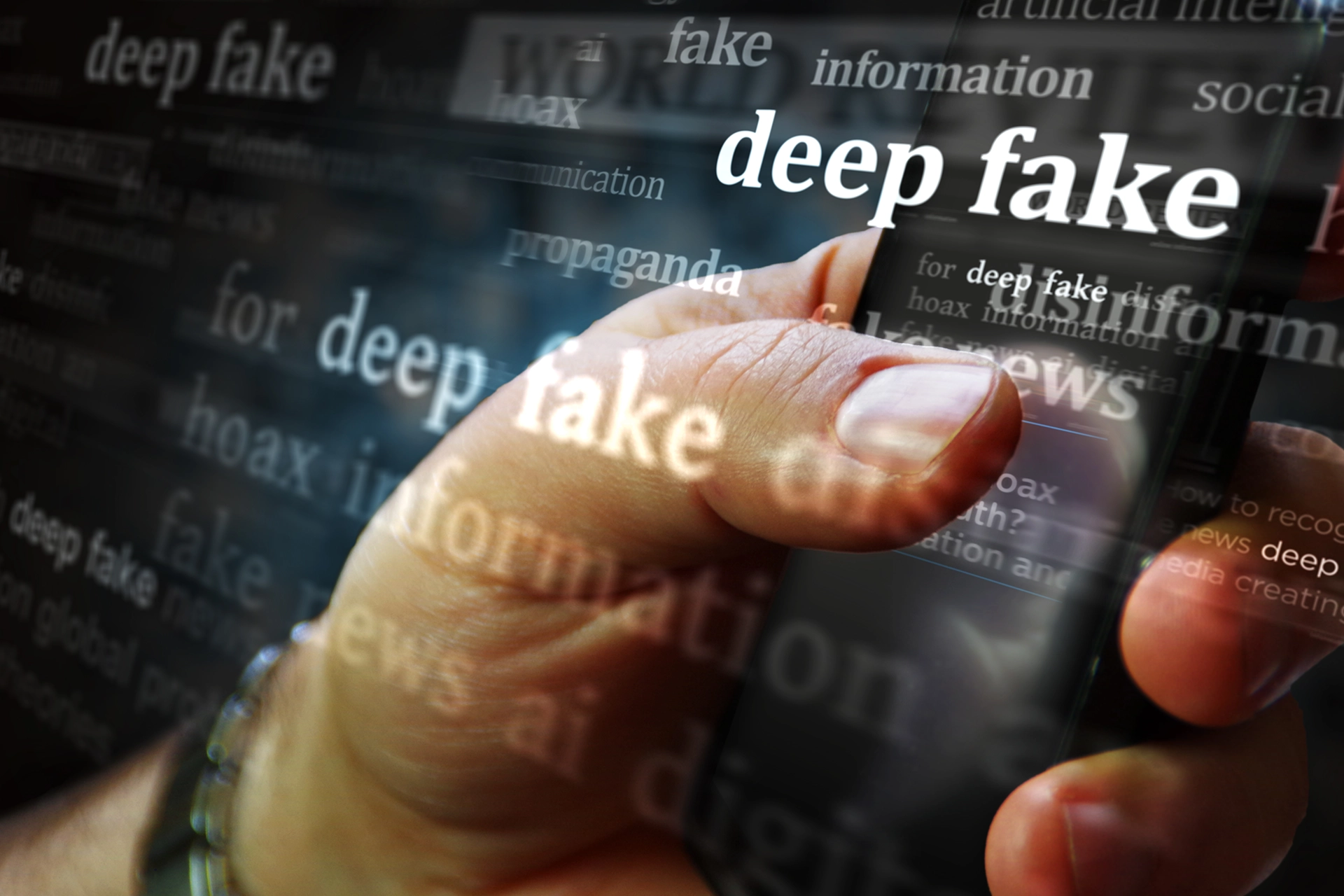
As technology advances AI has brought forth new challenges for businesses. Most recently the threat of deepfake attacks, AI-generated photos, images or audio files has increased, causing business leaders and employees to raise concerns about how to mitigate risk, protect themselves, and guard their businesses.

Below are three steps business leaders can take to prepare employees for a deepfake attack. 

Be Transparent

Before a crisis happens, business leaders must prepare employees for potential risks. If a crisis hits, employees are most often the first ones who have to communicate with angry or scared customers– calming their fears and resolving their problems. Be transparent with your employees and let them know potential risks or threats that a deepfake attacker might take advantage of before it happens. 

Examples of deepfake attacks can include the inappropriate use of AI-generated images or the spread of a fictional video on social media. A deepfake attack on a construction company can look very different than one on a dentist’s office. Employees are a company’s front line of defense. It’s crucial to be transparent, clear and upfront about company practices and threats.

Create Steps for Workers to Follow

Most companies already have a crisis playbook to guide them through incidents. If your company does not have a protocol in place for employees to follow in case a crisis hits, start building one immediately. When preparing for deepfake attacks, protocol should include educating employees on how to identify a potential deepfake. In addition, employees should know what to do if they suspect a piece of media is fake. Make the step-by-step guide short and easy to follow. If a crisis hits this protocol will help employees navigate the first 24 hours of a crisis until upper management can step in to provide more direction. 

Schedule Trainings

Before a crisis company leaders should hold group meetings with employees to get everyone on board with key messaging and proper crisis protocol.  Incorporate crisis messaging into monthly talks and urge company leaders to visit with employees to ensure understanding. Work with your company’s IT team to educate employees on how to identify if the media is a deepfake or not, similar to how companies conduct training on how to identify phishing emails or other scams. 

Other Strategies

Other strategies for preparing employees for deepfake crises include preparing a crisis playbook and preserving media connections. Take action now and safeguard your business against deepfakes. Take a look at our free guide on how to prepare for a deepfake crisis. 

Deepfakes: The End of ‘Seeing is Believing’

Deepfakes: The End of ‘Seeing is Believing’


When a story appears too good to be true, you might have heard the saying “seeing is believing.” The notion implies that if you witness something happening, even in a video or picture, it must be real or truly occurred. Not anymore. AI technology has advanced and Deepfakes (images, audio and video) are getting better and harder to detect.  

The challenge of detecting Deepfakes is growing as their usage rises, especially when celebrities and high-profile politicians become targets. While certain instances may be easy to spot due to video or image quality concerns, others are more inconspicuous, like a politician endorsing a cause that contradicts their beliefs, such as the video of Hillary Clinton endorsing Ron DeSantis for President or the picture of the Pope in a stylish white puffy coat.

Deepfake attacks against companies are becoming a looming concern, and consumers are highly susceptible to believing their content. Imagine encountering a video apparently from a company leader, announcing a product delay or a serious defect recall – you’d likely believe it, as there seems to be no motive for someone to fabricate such content.

Disreputable business competitors have compelling reasons to create doubt, even if it’s only temporary. For instance, imagine a scenario where a business competes for a major contract, and a video surfaces seemingly proving the company’s deception and inability to deliver as promised. This undermines their chances of securing the contract, ultimately benefiting the competitor who may have orchestrated or promoted the fake video to win the sale.

Prepare For An AI Crisis Now

It is crucial for businesses to proactively prepare for potential attacks and enhance their crisis communications plans by incorporating Deepfake-related scenarios and strategies for safeguarding their reputation.

The good news is that many existing crisis communications plans and internal structures will still be relevant. However, it’s important to note that defending against an AI and Deepfake-related crisis requires a different approach from what most companies have traditionally prepared for. When dealing with a Deepfake Crisis, two significant changes come into play within the traditional PR crisis plans:

  1. Acknowledging and responding quickly during a crisis has always been crucial, but when dealing with Deepfakes, mounting a rapid and comprehensive defense becomes even more essential. Deepfakes have the inherent ability to spread rapidly, particularly through social media, leading to exponential growth. Unlike traditional media outlets, which offer more time for investigation and providing thorough responses, Deepfakes demand immediate action to mitigate their impact effectively.
  2. In countering Deepfakes, mere denial of their authenticity falls short. It is imperative to provide substantial evidence and proof that discredits their validity. Third-party, independent verification significantly enhances the credibility and strength of your defense.

Take action now and arrange your team and Deepfake Detection software or forensic experts. Waiting until you’re in the midst of a crisis leaves no time. 

Companies will face a new type of crisis because of AI. They aren’t prepared.

Companies will face a new type of crisis because of AI. They aren’t prepared.


Companies aren’t prepared for the risk they may face from AI-generated Deepfakes. These scenarios aren’t farfetched, and they’re quite easy to produce and create chaos.

  • A fake AI-generated video showing your company leader stating that your big new product is going to be delayed by months, leading your stock price to drop so that short-sellers can make a killing before you even start to mount a defense.
  • A fake AI-generated image of key staff committing a crime appears just as the selection committee is choosing the winner of an important bid, creating enough doubt that they select your competitor instead.
  • A fake AI-generated audio recording where your company President appears to be on the phone making racist and inappropriate comments, creating a staff and customer uproar.

AI has created an entirely new category of crisis for companies, but few have a plan in place to deal with it if they come under attack.

In an AI crisis, quick response and defense remain crucial, but now, providing verifiable proof is equally essential. Mere denial won’t suffice, as the content appears incredibly realistic. Demonstrating evidence is a vital component of your defense strategy. However, trying to explain the falsehood on your own can be time-consuming and ineffective during a crisis. Instead, opting for an independent, third-party forensic review or a formal report from a reputable Deepfake Detection software company can bolster your defense significantly. An AI expert’s independent explanation carries undeniable weight and credibility.

The challenge lies in the limited availability of companies working on Deepfake Detection software. Additionally, many of these companies restrict their products to government or university research, while others focus on enterprise clients, like insurance companies, for fraud identification.

Our team invested significant effort in researching and securing agreements with highly reputable Deepfake Detection software companies capable of conducting immediate reviews. We also managed to find AI Deepfake industry experts willing to provide their personal insights to the media and the public, exposing the deception.

Take action now and arrange your team and Deepfake Detection software or forensic experts. Waiting until you’re in the midst of a crisis leaves no time.