Stop the Spread: Monitoring for Misinformation Will Save Your Business

Stop the Spread: Monitoring for Misinformation Will Save Your Business


Monitoring the internet for news mentions, customer reviews, and social media posts is a crucial part of maintaining a business’s reputation. 

Businesses need to stay aware of what is being spread on the internet to mitigate risk, maintain trust and credibility, and support customer relations. Recognizing the spread of misinformation is key to building a strong defense against digital deception. It’s important to react to misinformation quickly and efficiently as misinformation can cause major business repercussions such as loss of customers and long-term reputation damage. 

With the rise of digital deception, it is more important than ever for businesses to preserve their image to retain and gain customers. Reputation management through monitoring for misinformation safeguards trust and credibility for companies and is a key component of long-term success. 

One strategy businesses can use to mitigate the risk of misinformation is to create an online space where customers can find and connect with your brand, such as websites or social channels or a website. If customers know the key messaging and tone of a brand they are less likely to confuse it with misinformation. In addition to creating an online space where customers can recognize a brand, maintaining that space is also crucial. Businesses should prioritize monitoring for misinformation while creating reliable messaging and sustaining engagement with customers.

Other strategies for maintaining reputation include preparing a crisis playbook and preserving media connections. Take action now and safeguard your business against deepfakes. Take a look at our free guide on how to prepare for a deepfake crisis. 

4 Ways to Preserve Your Business’s Image in the Age of Digital Deception

4 Ways to Preserve Your Business’s Image in the Age of Digital Deception


Digital deception is increasing and with today’s evolving digital landscape, leaders may be worried about maintaining their business’s image. It’s harder than ever for businesses to create trust and build relationships with customers, but with a little effort you can share your story the way it was meant to be told. 

Here are four ways to preserve your business’s image in the age of digital deception. 

1. Consistent Messaging 

Messaging is how customers will recognize your company’s brand. If messaging is inconsistent, your target audience could become confused, ultimately leading to a decrease in customer traffic and a loss of trustworthiness. Make sure that messaging is consistent across all channels of communication, internally and externally, to ensure that customers can find your company, recognize your brand, and trust your products or services. In addition, it’s important to remember that consistent messaging should align with your brand’s mission, values, and key principles. 

2. Crisis Management Planning

Creating a crisis playbook is a crucial part of preparing your business for unforeseen crises. Incidents such as data breaches, natural disasters, the spread of damaging viral videos and more can have a lasting impact on a company’s reputation. Having a well-planned crisis management plan in the form of a crisis playbook will allow you and your employees to respond to crises in a timely manner, reducing reputational damage and keeping customer and employee trust. 

3. Media Relations

Building relationships with media such as reporters and editors will help ensure that your brand’s story is being told accurately. Making an effort to build a relationship with local or industry media will allow your company to be part of the media narrative that impacts the industry, local community, and more. 

4. Monitoring Online Reputation 

Monitoring the internet for news mentions, customer reviews, and social media posts is an important part of maintaining your business’s reputation. Creating an online space where customers can find and connect with your brand such as websites or social channels is a key aspect of creating a brand. Maintaining that space is crucial for sustaining engagement with customers and reliable messaging. 

With the rise of misinformation and digital deception, it is more important than ever for businesses to preserve their image. Building a strong defense against digital deception includes preparing a crisis playbook, monitoring online presence, sharing consistent messaging, and preserving media connections. Reputation management safeguards trust and credibility for companies and is a key component of long-term success. 

These Types of Deepfakes Can Affect Your Business

These Types of Deepfakes Can Affect Your Business


With the advancement of AI technology, businesses are seeing the emergence of new challenges and threats. A threat that has risen to the top of business leaders’ list of concerns is the threat of deepfakes. Deepfakes include the manipulation of videos, audio clips, photos, and other content for the purpose of misleading an audience or manipulating others into believing fake content is real. 

The spread of misleading content can significantly damage a brand’s reputation and trust, causing a major loss of business. If you’re a business leader, you should be on the lookout for the following types of deepfakes and how they can affect your business.

Deepfakes and Financial Fraud

Financial fraud can be attempted through someone using a deepfake to appear as a trustworthy representative within an office. An example of financial deepfake fraud could be a voicemail left on an employee’s phone that sounds like their CEO or HR representative asking the employee to email over banking information for payroll reasons. However, in reality, the voice message is a deepfake, it’s an AI-generated message created to mimic a trustworthy person. This type of fraud is dangerous because an employee who has a lot on their plate or who is unaware of the threat of deepfakes might not think twice about confirming whether the request is legitimate.

Deepfakes and Impersonation 

Impersonation is one of the most common types of deepfake fraud. Using AI tools, almost anyone can impersonate someone as long as they have access to photos, video, or voice recordings of them. Examples include the creation of an Instagram account mimicking the CEO of the company. The account may post photos of the CEO committing inappropriate actions, sharing extreme beliefs, or voicing unpopular opinions for the purpose of ruining the reputation of the CEO, brand or company. Impersonation is very dangerous for a business and can result in detrimental business loss and reputational damage, even if caught quickly.

Deepfake Impacts By Association 

Sometimes, damage to a business’s reputation won’t be the main goal of a deepfake. However, many businesses in today’s world of viral videos and internet controversy will receive backlash through association. For example, an AI-generated video of a celebrity behaving inappropriately at a public event wearing a hat with the logo of a business could appear funny to viewers at first, but when spread can cause major repercussions. As viewers dive deeper into the video they can acknowledge the celebrity’s hat and the business it represents. This is just one simple example of how a business can be pulled into a crisis, incidents where businesses deal with repercussions because of association happen all the time and leaders need to be ready. 

Deepfakes and News 

Deepfake fraud in the form of a news story can spread far fast. It is arguably one of the hardest crises for businesses to stop once started. For many reasons, creators of this type of fraud spread illegitimate content appearing in the form of news articles or updates. Deepfakes like this can be dangerous as news outlets will sometimes pick up stories others have published, resulting in false information being shared. For example, an AI-generated video of an employee protesting in an extreme way is shared online and then shared via social media. Social media users may not realize the content is a deepfake and continue sharing. The video was fake from the start and users may eventually realize that, but now it is too late.

Ways to Combat Deepfake Fraud

Businesses need to be prepared for the threat of deepfakes and deepfake fraud. Some ways businesses can prepare for this challenge is by making sure employees are aware of the threat of deepfakes and are educated on how to tell if a piece of content might be deepfake fraud. In addition, businesses can increase digital security, keep media identification tools on hand, and create internal business strategies on what to do if a threat ever happens.

At 10 to 1 PR, we have secured agreements with highly reputable deepfake detection software companies capable of conducting immediate reviews of content in addition to creatine strategies and crisis playbooks for businesses to help prepare for the threat of deepfakes. We also have connections to AI Deepfake industry experts willing to provide their personal insights to the media and the public, exposing the deception.

Take action now and safeguard your business against deepfakes. Take a look at our free guide for how to prepare for a deepfake crisis. 

A Tennis Lesson in Crisis PR

A Tennis Lesson in Crisis PR


What we can learn about public relations in the latest blowup at the 2021 French Open

Tennis fanatics, like myself, have been excited to tune in to the early rounds of the French Open this week, the sport’s most prestigious tournament held on the slippery red clay surface. But even before the tournament started, dirt was being thrown off court when Naomi Osaka, the 2nd seed and arguably the most popular tennis player in the world, announced that she would not participate in the normally required post-match press conferences.

My interest was piqued with the combination of two of my life’s passions: tennis and media. I’m a big fan of Naomi and how she has used her epic platform to advocate for important issues despite being a self-described introvert. However, I also understood how post-match press conferences play a significant role in sharing the stories that come out of these tournaments to promote the sport. I quietly applauded Naomi for taking a stand for what she believed were outdated rules and went on scrolling my social media feed.

I cringed at what happened next. Criticism mounted from tennis media and tennis tournament directors alike. As the tournament began, all the leading professional tennis players were asked about Naomi’s decision in their own press conferences. The news transcended tennis media to reach general sports as well as PR/media outlets. Everyone was talking about how Naomi was selfish and entitled.

After Naomi won her first-round match and skipped her required press conference, she was fined $15,000. Then, the four major tennis tournaments all came together to threaten further action if Naomi continued to refuse to participate in the press conferences.

“We have advised Naomi Osaka that should she continue to ignore her media obligations during the tournament, she would be exposing herself to possible further Code of Conduct infringement consequences. As might be expected, repeat violations attract tougher sanctions including default from the tournament (Code of Conduct article III T.) and the trigger of a major offence investigation that could lead to more substantial fines and future Grand Slam suspensions (Code of Conduct article IV A.3.).”

At this point, Naomi’s goal to be able to focus solely on her tennis had blown up, and she surprised everyone by withdrawing from the tournament.

Revealing that she has been dealing with depression and mental illness for years, it seemed that everyone who had once criticized her was now offering their condolences, including the four major tennis tournaments who issued a new statement:

Ironically, the president of the French tennis federation read this statement at a press conference… and refused to answer any questions.

Collectively, while concerned for Naomi Osaka’s mental health, everyone seemed to agree that the events that had transpired were generally bad for tennis. The sport’s star player unable to play a major event citing debilitating mental illness. Tennis being branded as an “out of touch” sport that has too many rules. No one appeared to come out a winner.

As I was watching this all unfold, I couldn’t help myself from putting my crisis PR hat on. What could have been done to avoid this terrible situation? My response: a dose of empathy.

When a crisis is brewing, emotions are amplified and tensions mount. I could see this happening in real-time, especially when the four major tournaments came together to issue their original joint statement in an effort to protect the status quo. The whole thing came off incredibly defensive, and created a result that no one actually wanted.

Had the decision-makers for each of the major tournaments applied some empathy, they would have been able to answer the question of why they were dealing with this current situation and how their plan of attack was bound to backfire. Had they applied some empathy, they would have been able to determine a realistic roadmap to achievable goals that worked for everyone. Instead, what we saw was a public shaming of one of the sport’s most beloved players.

What I’m also saying here is that to avoid terrible crisis scenarios like this one, someone needs to be thinking about the big picture and needs to be able to think through all possible reactions to different scenarios. It’s easy to be reactive when dealing with a crisis, but if you spend the time to prepare for all scenarios when not facing a crisis, you will have a much clearer head and be able to consider all sides of an issue when developing a plan.

Next time you find yourself in a crisis, take a breath to apply some empathy. Ask why you are in this situation, put yourself in the other party’s shoes, and truly identify the root cause of the and go from there to find a reasonable solution. Or, plan ahead for a slew of crisis scenarios so that you will always be prepared to get the desired result.

As for Naomi, the ball’s no longer in her court. We’ll have to see what happens next, but tennis will not be the same without her. Get well soon, Naomi.

By Erica Fetherston, PR & Operations Manager at 10 to 1 Public Relations

750 news stories in four days, and I wish not one was necessary

How to prepare employees for a deepfake attack


On April 28, 2020 my PR firm signed a new client, Ambulnz, a national ambulance services provider at the time with 1,000 employees in 8 U.S. States and operations in the United Kingdom (they’ve grown rapidly this year expanding their services and geography that ultimately led to them going public, but that’s a success story for another time). I’d been chatting with them for a while, and normally I’d be very excited to get the contract signed. Instead, their reason to sign when they did brought back emotions and memories of the toughest work week of my life back in 2004.  Here’s why.

Incoming Crisis

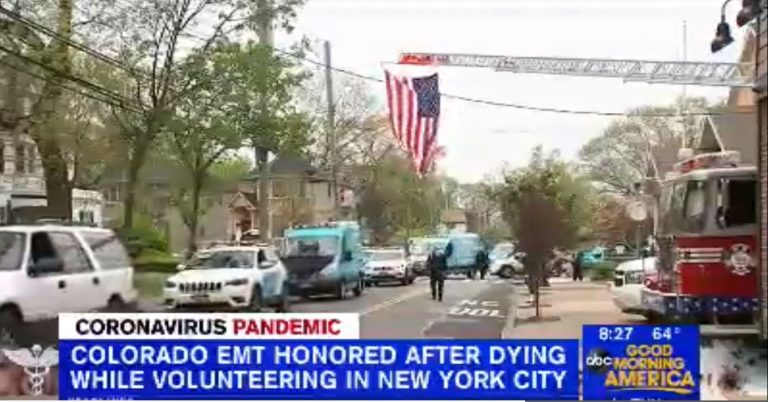
You may remember when COVID-19 was first becoming a reality in the U.S., New York City was particularly hard hit making it the pandemic focal point of the nation.  Ambulnz had deployed more than 70 employees to New York City to be part of the company’s FEMA COVID-19 response to help New York City’s overwhelmed EMS and healthcare system. Those deployed had volunteered from its operations across the U.S. such as Los Angeles, Tennessee, and Colorado.

One of their deployed Colorado paramedics, Paul Cary, was in the hospital with COVID-19 contracted after transporting New York patients. Doctors said the prognosis looked grim. Expecting the worst, they knew they needed experienced PR guidance. They also needed someone to become the sole primary point of contact for media on behalf of the company, as well as the family, throughout the crisis if Paul did in fact succumb.  

Some quick background for those who don’t know: before launching 10 to 1 Public Relations, I worked in-house leading PR efforts for statewide and national EMS (emergency medical services) companies for several years. The first time I led media relations efforts for a Line of Duty Death (LODD) was in 2004 in the Phoenix area. That experience literally changed my professional career, teaching me the importance of controlling the flow of information and giving me the confidence that I could handle any crisis and that PR was truly my career calling.

So here I was again, 16-years later.  My team quickly engaged, working with the Ambulnz team we began preparing for the worst. Unfortunately, two days later, paramedic Paul Cary died from COVID-19 in a New York City hospital.

Facing Unique Challenges

Any LODD is horrible, but logistically this one was unique. Usually the community outpouring and media interest is limited to a single media market. Living and working in Colorado for more than 30 years, Cary’s Denver community was mourning. With his death occurring in New York City while he came to the City’s aid, New York City was equally mourning. New York City being the largest media market in the U.S. alone can be overwhelming to a media relations department during a crisis but now we were focused on two locations 1750 miles from one another.

Add on top of that, this marked the first death of a volunteer federal responder to New York’s COVID response effort, which created national media interest. National media, New York City media, and Denver-area media. All at the same time, from different time zones. Three because it wasn’t only Denver and New York, but media was also being coordinated from Arizona where my team is located. 

Another challenge: We had never actually met any member of the Ambulnz team before, only a few phone calls with two or three people, so we needed help identifying the right contacts within the organization to get whatever we might need.

The final challenge was we had to do everything remotely because of social distancing. Flying our team into one of the cities to assist on the ground just was not doable.  

In the end, over a 4-day period of 15+ hour days, I think that week was one of the most professionally and personally gratifying work experiences I can recall. 

Enacting the Crisis Public Relations Plan

Ultimately there were more than 750 news stories in four days. We coordinated interviews and worked with reporters from some of the country’s most recognized national media outlets like CBS This Morning, Good Morning America, CNN, Fox News, the New York Times, and the Washington Post. We coordinated interviews and worked with local print reporters and TV affiliates in New York City and Denver like the Denver Post, the New York Daily News, WABC, WNBC, Denver7 and KUSA. And we did so quickly and equally, regardless of the media outlet’s size so that every reporter felt like they got our full attention.

Developments that led to a lot of the media interest included public statements from the Governors of New York and Colorado, as well as the Mayors of Aurora, Denver, and New York City. The biggest surprise to me came from the Mayor of New York City when during a press conference surprised us all to say that a monument would be built in Paul’s honor recognizing his sacrifice and all the healthcare workers that came from out of state to help the city when it was needed most. 

The New York City Fire Department helped coordinate a massive funeral procession of emergency vehicles, only to have that effort matched in Denver with a 160-vehicle procession. Both the Newark and Denver Airports allowed bagpipes and full honors as the casket was loaded and unloaded from the plane, and both airports saluted the flight with water cannons as it taxied to and from the gate.

These efforts, and participation by other agencies and officials, made a huge impact on other first responders and healthcare workers as well. I’m proud that we had the opportunity to successfully help share it with the public through the media.  

Full Circle

My pride extends beyond our media efforts. We also coordinated all the public statements, employee outreach, coordinated with the family to generate and share their public statements, and also assisted with the planning of the public events as Paul’s body returned to Denver that Sunday night. 

To think of what was accomplished so quickly, I can’t help but think of how many people contributed to the efforts to share Paul’s story with so many. I’m overwhelmed with gratitude towards the many local PR pros that stepped up to help in Denver and New York since I couldn’t be there personally on the ground to do it myself. I cherish the kind notes from media folk and other agencies for how we performed, and for the quality of the communications we shared. 

Throughout this whole experience, there’s been one more emotional tie-in that has taken me back to my first LODD. The date Ambulnz called me to hire us and seek our help regarding the LODD was 16 years to the day of Tammy Mundell’s death, the first LODD I worked which solidified my career path. With that first experience in mind constantly through the week, I was able to lead my team with a solid plan and deliver the results our client was looking for.

Thank you to first responders

My team and I would like to thank our country’s first responders serving on the front lines of the coronavirus pandemic. We have immense gratitude for the work that you do every day to help those in need and keep our communities safe. Thanks to you and your families, from the bottom of our hearts.

Finally, I hope that my recap doesn’t come across as self-serving.  I actually wrote this nearly a year ago for myself, but never published it.  A year later, as we approach the last week of April and these solemn anniversaries, I keep thinking about how it impacted me personally so I thought it worthy of sharing, now.

Rest in peace, Paul Cary.  Rest in peace, Tammy Mundell. 

A Lesson for Business During March Madness

A Lesson for Business During March Madness


It’s that time of year- The March Madness college basketball tournament.  If you’re not a college basketball fan, keep reading. Don’t worry, what I’m going to share should still make sense.

Like a lot of people, every year I complete a bracket of the participating teams to predict a winner. But, in truth, I barely pay attention to college basketball during the season.  So how do I choose which team I think will win?

Sometimes I favor teams from my hometown simply because I want to see them win, or the team representing the mid-major conference that my alma mater plays in.

Like most people, I usually just go with the teams I’m most familiar with, or the teams with higher rankings. 

Duke Basketball is the perfect example.  For the first time in decades, Duke did not make the tournament, but had they squeaked into the field of 64 my assumption is that a lot of casual basketball fans would have chosen them to make the Sweet 16. Simply off of name recognition, awareness of their team history, and out of respect for their well-known coach.  Their legacy matters- and people are willing to give them the benefit of the doubt even during a tough season. 

A lot of people choose a product or business the same way. 

There’s comfort in familiarity.  There’s confidence in a track record of success, even if the current task is something new.  Belief in individuals transfers to trust in an organization.

How does a business achieve this?  By playing the long game and promoting their successes along the way.  It’s not by announcing one big new contract, it’s by announcing a steady stream of contract wins over time.  It’s not by creating one single event, it’s by promoting numerous events throughout the year.

One good season or one good story isn’t going to earn long-term loyalty. It’s repetition of actions, over long periods of time, which ultimately breeds public confidence. It’s that awareness and reputation which will sustain a company even during a rough patch.

Finally, allow me to share one last off-topic story simply because it makes me smile every year around this time.  Probably a good 15 years ago or so, a friend of mine had a vasectomy.  He had to book it far in advance because he wanted the timing to coincide with the start of the basketball tournament.  Turns out he had to book early because a lot of guys have the same idea. They figure if they had to sit at home with a bag of frozen peas in their lap for a couple of days, they might as well do it while there were constant basketball games on TV!  


Surviving the Election News Cycle

With fewer than 50 days to go until the 2020 General Election, PR pros and casual news consumers alike will have noticed the continued focus on the election during each news cycle. Election-related stories will continue to be a major part of our daily news diet, even amidst a continuing global pandemic, raging wildfires in the west, discussions about social justice, and other pressing issues.

Local and national media alike have been doing a great job to help voters get the information they need to participate in the electoral process. This is despite documented outside efforts to spread misinformation about the election.

At 10 to 1 Public Relations, we’ve been doing our part to build confidence in the electoral process by helping our client Runbeck Election Services, an elections services company focused on delivering election printing, equipment and software solutions, explain the technicalities of how the vote-by-mail process works. This year, Runbeck is planning to print 15 million vote-by-mail packets, four times more than they produced in 2016, as demand for vote-by-mail soars as a safe method of voting during the pandemic.

In the past few months, we’ve helped connect Runbeck to local and national media to explain how vote-by-mail is a safe and secure process which can be trusted by the voters to deliver legitimate results. Here are just a few recent stories featuring Runbeck:

As we have been working on these stories, we believe there is really one way to survive the oncoming onslaught of election news coverage as we get closer to November 3. Make sure you are paying attention to trusted and verified sources on the election.

Here in Arizona, according to the Arizona Secretary of State, you must register to vote or update your voter registration on or before Monday, October 5 to participate in the 2020 General Election. If you plan to vote by mail, you must request a ballot or join the Permanent Early Voting List (PEVL) on or before Friday, October 23. It is recommended that you mail back your ballot as soon as possible and not after Tuesday, October 27. If you still have your vote-by-mail ballot after October 27, you can drop it off at a voting location or drop box before 7:00 p.m. on Tuesday, November 3.

All Arizona voting information can be found at Arizona.Vote, or visit Vote.org for other state-specific voting information, deadlines, and instructions.

Because one thing is for sure: You can’t complain if you don’t vote.

By Erica Fetherston, Sr. Account Exec. at 10 to 1 Public Relations

Video Series: Public Relations Tips To Get Through COVID-19

As the novel coronavirus has spread across the globe, business as we have known it has been upended. While we work together to stop the spread of COVID-19, there are things companies can be doing to position themselves to withstand the pandemic, help the community, and ultimately come out of this crisis stronger.

Public relations can play a role in delivering on these goals. 10 to 1 President Josh Weiss has created a video series of brief videos to give you ideas on how you can best position your company utilizing basic public relations and crisis communications tactics.

You can check out our video series below or on our YouTube page.


PR & COVID-19: Share Your Expertise

https://youtube.com/watch?v=4rCj5Sf89oY%3Ffeature%3Doembed

PR & COVID-19: Find Opportunity for Every Story

https://youtube.com/watch?v=atS6Rv0KRDs%3Ffeature%3Doembed

PR & COVID-19: Walk Through Your Warehouse

https://youtube.com/watch?v=emdFN9dWdA0%3Ffeature%3Doembed

PR & COVID-19: Pivoting The Right Way

https://youtube.com/watch?v=pnpAuAJ82Dg%3Ffeature%3Doembed

PR & COVID-19: Follow The Leader

https://youtube.com/watch?v=3eroAMKpMNM%3Ffeature%3Doembed

PR & COVID-19: Be Honest With Your Customers

https://youtube.com/watch?v=E0drKp1XgoM%3Ffeature%3Doembed

More videos will be added on a regular basis – stay tuned!

The First 24 Hours of a Crisis: Offer Questions, NOT Answers

Boom.  Out of nowhere, a crisis hits your company or community. As the leader, everyone’s turning to you.  In part to see how you react, but mostly for instruction confirming how they’re supposed to respond. 

Everyone’s turning to you for answers- but that’s the last thing you should be doing during the first 24 hours of a crisis.  Your job the first 24 hours is to ask questions, and to avoid giving answers.

The first questions you ask should be directed to your employees.  What do they need to deal with the immediate problem? How can you help get them the help they need, quickly? These questions not only demonstrate your support to your team but instructs them to take action.

The next set of questions are to gather information.  How many people were initially, directly affected by the crisis issue?  Follow that with questions about how to prevent new victims from being negatively affected by the same crisis in the coming hours.

These questions upfront are necessary to gather the information you need to make strategic decisions and ultimately later, proclamations for the future.

Even when talking to reporters, customers or the public, you should still focus on asking questions during the first 24 hours, not giving answers.

During the first 24 hours avoid making declarative statements or accusations against others that commit you or your company to certain actions. Avoid giving definitive answers or suggesting long-term solutions that could be considered controversial as your statement will come across as opportunistic instead of as a genuine solution.

The only initial statements you should make are holding statements (see our earlier blog entitled Part 1 of what to do in a PR crisis). Otherwise, you essentially should be rephrasing and sharing the questions you asked your staff and the answers you were given.  Basically you’re going to say that your team is still investigating details of the incident to make sure it never happens again, but your immediate priority is to better understand the full impact to those effected and how best, and most quickly to help them.

It’s only on day two, after more facts are known and cooler heads prevail, that you can start delivering answers and rallying support for specific actions. 

If there’s a general uproar over the crisis, you can also ask rhetorical questions.  For example, if the crisis is a criminal act made against your company, ask aloud who would do such a heinous thing effecting so many. Share in the public outcry and frustration, but be careful in pointing blame outwards if you suspect a member of your team might be involved.

As the leader, your job when a crisis hits is to ask questions and support your teams in resolving the immediate threat.  After the immediate pressure of the crisis subsides, your job refocuses into identifying what caused the problem and initiating a long-term fix to avoid a repeat of the crisis and regain the confidence of your customers and the public.

A fantastic example and story of how to deploy the 24 hours of questions before providing answers strategy can be heard in a podcast called Without Fail where in an episode featuring Dayton, Ohio Mayor Nan Whaley talks about the immediate aftermath of the mass shooting outside a Dayton entertainment area called the Oregon District. Here’s a link to the episode https://gimletmedia.com/shows/without-fail/v4h8ow including a transcript of the discussion.

Does Your Company Have a Media Emergency Playbook?

How your Company Can Win By Preparing for a Media Crisis Like It’s a Game.

Remember from childhood the game “Mad Libs”?  It’s the grammar game where there’s a one-page story with a bunch of missing words in the narrative.  The game leader asks the other kids to yell out what’s called for in the blank space- like a Verb, or a City name, a person’s occupation, an Adjective, etc.  After all the missing words are filled in, the game leader reads the now silly story to the enjoyment of the other kids who help contribute to the narrative. 

Games are fun, but some games are more important to win than others.  If you want to your company to win during a media emergency/PR crisis, you need to prepare in advance.  One way to win is by copying the Mad Libs game structure to creating a media emergency playbook your company can use when needed.

Let’s face it, it’s not IF a media emergency will occur, but WHEN.  A bad response can create a significant, lasting negative perception for a company, while a well-handled crisis can earn you long-term customer, employee and investor loyalty. The good news is that it’s possible to manage a crisis well, aided a little bit of planning.

Here are some tips to create a media emergency response plan.

Start by creating a list of the five most likely negative crisis scenarios that could happen to your company. 

For example, if you have employees driving company branded vehicles, a likely crisis could be a bad crash.  If you have employees performing manual, skilled labor, maybe there’s potential for a significant injury or loss of life. If you handle personal information or credit card information, there’s a significant risk of a hack or stolen data.

Create a one or two paragraph written statement for each scenario of how you would respond. 

The initial statement is simply to acknowledge the issue and demonstrate to the public and media that you’re taking the issue seriously and professionally and are investigating it to gather more facts.  It isn’t supposed to be detailed nor is it to explain how you’re fixing the problem.

This initial statement (often called a holding statement) will give you time to provide a more meaningful update (several hours or even a day) later, when you would share more details and examples of how you’re dealing with the situation.

Get sign-off from Executives, Legal team, etc. on your proposed statement.

Get approvals for your template statements now, before the crisis scenario actually occurs.  Examples would be Executives or the Legal team, who most normally would delay a response in the moment because they’d insist on reviewing and wordsmithing it first.  With your pre-approved response, all you’ll need to do is “fill in the blanks” and update some of the details like names, locations, other vital stats, etc.  With the initial media statement out of the way, you will save the entire team significant time allowing them to focus on the actual crisis and to help get it resolved.  Your fast response will also help protect your reputation and influence the public’s response when they learn about the crisis.

Start over and create another list of five potential scenarios which may be less likely to occur, but which scare you (or your CEO) the most. 

Maybe it’s a #MeToo scenario, or fear of an employee being arrested at work even though their crime has nothing to do with your business.  Go through the same process of preparing a short response and getting Executive and Legal approvals.

Strategically share the Media Emergency Playbook with key Executives and company spokespeople.

Not everyone should get a copy of your template responses.  Only share it with the handful of people most likely and authorized to share them with reporters on short notice.  These aren’t public documents for all to see in advance.  While the circle of people with copies should be small, it needs to be a large enough group where the people who ultimately need them can’t locate or find them. Especially in the event the most obvious people are on vacation and/or unreachable. 

While there’s a lot more to be done to properly prepare for, let alone handle, a crisis, having a “Mad Libs” style media emergency playbook is a great start for any company.